Answer Engine Optimization (AEO): How to Make AI and Search Cite Your Brand
As AI-driven search takes center stage, one truth is becoming clear: your brand’s visibility no longer depends only on ranking links, it depends on being the answer that AI systems and search engines trust enough to quote. Answer Engine Optimization (AEO) is the new layer of digital visibility that ensures your content is not just seen, but spoken, cited, and featured across generative AI and voice search platforms.
At RR Web Services, we help brands transition from search visibility to answer authority, where every piece of content serves both human readers and machine intelligence with equal clarity.
What Is Answer Engine Optimization (AEO)?
Answer Engine Optimization is the process of structuring and writing content so it can be directly used, summarized, or cited by AI systems such as ChatGPT, Perplexity, Gemini, or Google’s AI Overviews.
While traditional SEO aims to rank pages on search engine results, AEO focuses on earning a position within AI-generated answers and voice assistant responses. The goal is simple yet powerful: when someone asks an AI or search tool a question related to your expertise, it should mention, cite, or source your brand.
AEO sits at the intersection of three disciplines: content clarity, semantic structure, and trust. It’s where keyword-based SEO transforms into intent-based communication optimized for both humans and algorithms.
Why AEO Matters More Than Ever
Recent studies show that over half of all searches end without a single click. Users now get their answers directly from AI summaries, meaning visibility no longer begins on page one—it begins in the AI box itself.
If your content isn’t built to be parsed and trusted by these systems, your brand simply vanishes from view. AEO ensures your content:
-
Appears in AI-generated summaries, snippets, and voice results.
-
Retains brand visibility even when users don’t click.
-
Strengthens credibility across multiple platforms and ecosystems.
-
Future-proofs your digital strategy against the rise of zero-click search.
According to RR Web Services, “AEO is not just about optimizing for machines. It’s about creating clarity and consistency so human intent and machine logic align. That’s where brand trust is built.”
How AEO Differs from SEO
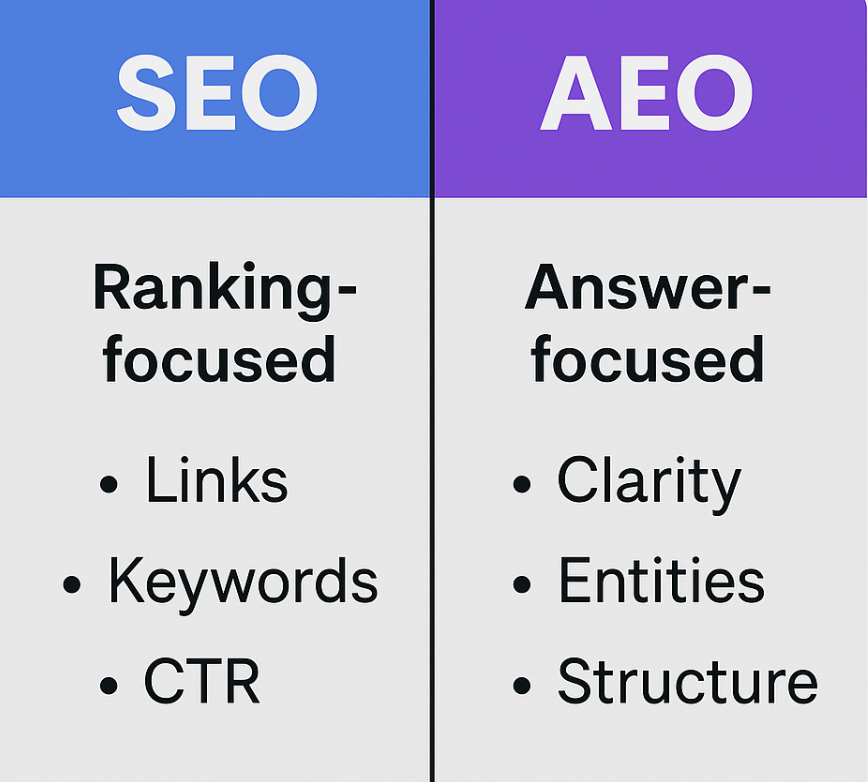
SEO and AEO share the same goal—visibility—but operate differently:
| SEO | AEO |
|---|---|
| Focuses on ranking within SERPs. | Focuses on being cited or summarized by AI systems. |
| Optimizes keywords, backlinks, and structure. | Optimizes question-answer clarity and structured semantics. |
| Competes across multiple positions. | Competes for the only cited position. |
| Prioritizes traffic and clicks. | Prioritizes visibility and credibility. |
In other words, SEO builds discoverability, while AEO builds authority recognition. When combined, they create an ecosystem where your brand owns the conversation, not just the keyword.
How to Build an AEO-Optimized Content System
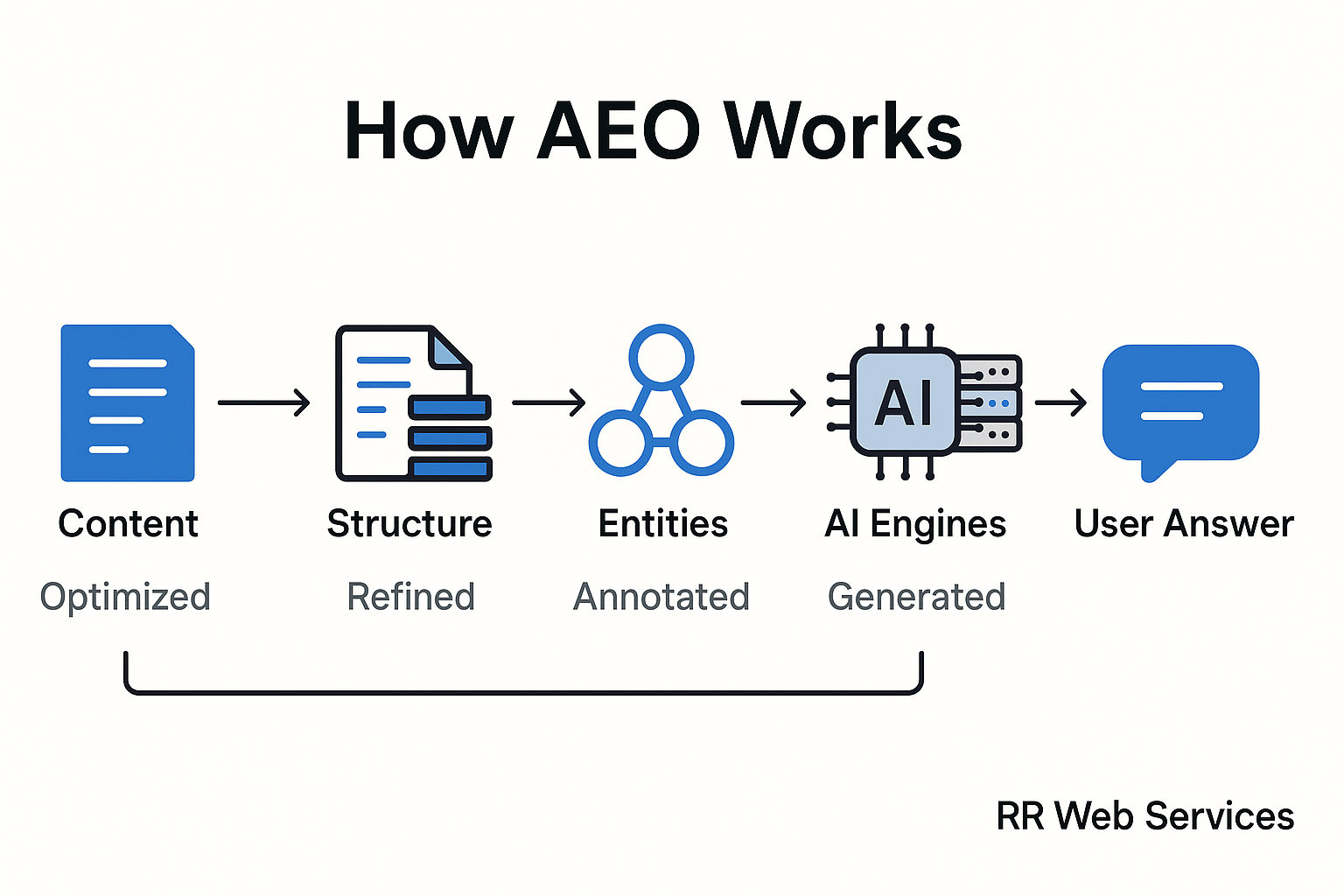
AEO doesn’t replace SEO; it enhances it by adding a layer of machine interpretability. Here’s how to make your content answer-ready:
1. Identify Question-Based Opportunities
Start with user intent. Instead of optimizing for “content marketing strategy,” target “what is a content marketing strategy” or “how to build a content marketing strategy.” Use tools like Google’s People Also Ask, AnswerThePublic, or Semrush’s question filters to identify queries that AI systems naturally surface.
2. Write Direct, Structured Answers
Answer engines prioritize clear, concise language. Structure answers near the top of the page, under question-style H2s or H3s. Summarize first, elaborate second. Use tables, bullet lists, and bolded phrases to make extraction easier.
Example:
Question: What is Answer Engine Optimization?
Answer: Answer Engine Optimization (AEO) is the process of optimizing content so AI systems can extract and present it as a direct answer to user queries. It focuses on clarity, structure, and authority.
3. Implement Schema Markup
Schema markup bridges the gap between your words and how machines interpret them. Add structured data to key pages—FAQ schema, HowTo schema, Organization schema—to help AI systems recognize and verify your content’s context.
Most modern SEO plugins (like Rank Math or Yoast) can automate schema for your articles, products, and service pages. For advanced AEO, custom schema helps reinforce your entity relationships and brand attributes.
4. Optimize for Voice and Conversational Queries
AEO thrives on conversational tone. Think about how users speak rather than type:
-
“What’s the best SEO service for startups?”
-
“How do I make my business show up in ChatGPT?”
By including natural phrasing and direct answers, you increase your likelihood of being cited in voice results and AI outputs.
5. Strengthen Brand Trust and Mentions
AI systems look for authority. This comes from consistent brand signals—expert content, verified profiles, reviews, and citations across web sources. Maintaining uniform NAP data (name, address, phone) and a clean schema structure across platforms boosts credibility.
At RR Web Services, we integrate digital PR, structured content, and technical SEO to build entity-level trust signals that make AI recognize a brand as reliable.
6. Refresh and Monitor Frequently
Answer engines evolve rapidly. Regularly review which of your pages appear in AI-generated answers using platforms like Perplexity, ChatGPT browsing, or Google AI Overviews. If your brand isn’t showing up, refine structure, add schema, or update context.
Visibility in AI is not permanent—it’s earned and maintained through clarity and accuracy.
AEO in Action: Lessons from Real-World Case Studies
The shift to AEO isn’t theoretical; brands are already gaining measurable visibility through it:
-
Local Service Business: A Delhi spa used speakable schema and FAQ sections to dominate voice queries like “best facial for oily skin near me,” resulting in 41% more bookings.
-
B2B SaaS Brand: Structured landing pages around high-intent queries increased trial-to-paid conversions by 3x from AI-originated traffic.
-
Marketing Agencies: Firms using question-based formatting are now cited directly in Google’s AI Overviews and ChatGPT answers.
Each of these success stories reinforces a key truth—AEO rewards brands that create clear, structured, and authoritative answers.
The Role of Content Architecture in AEO
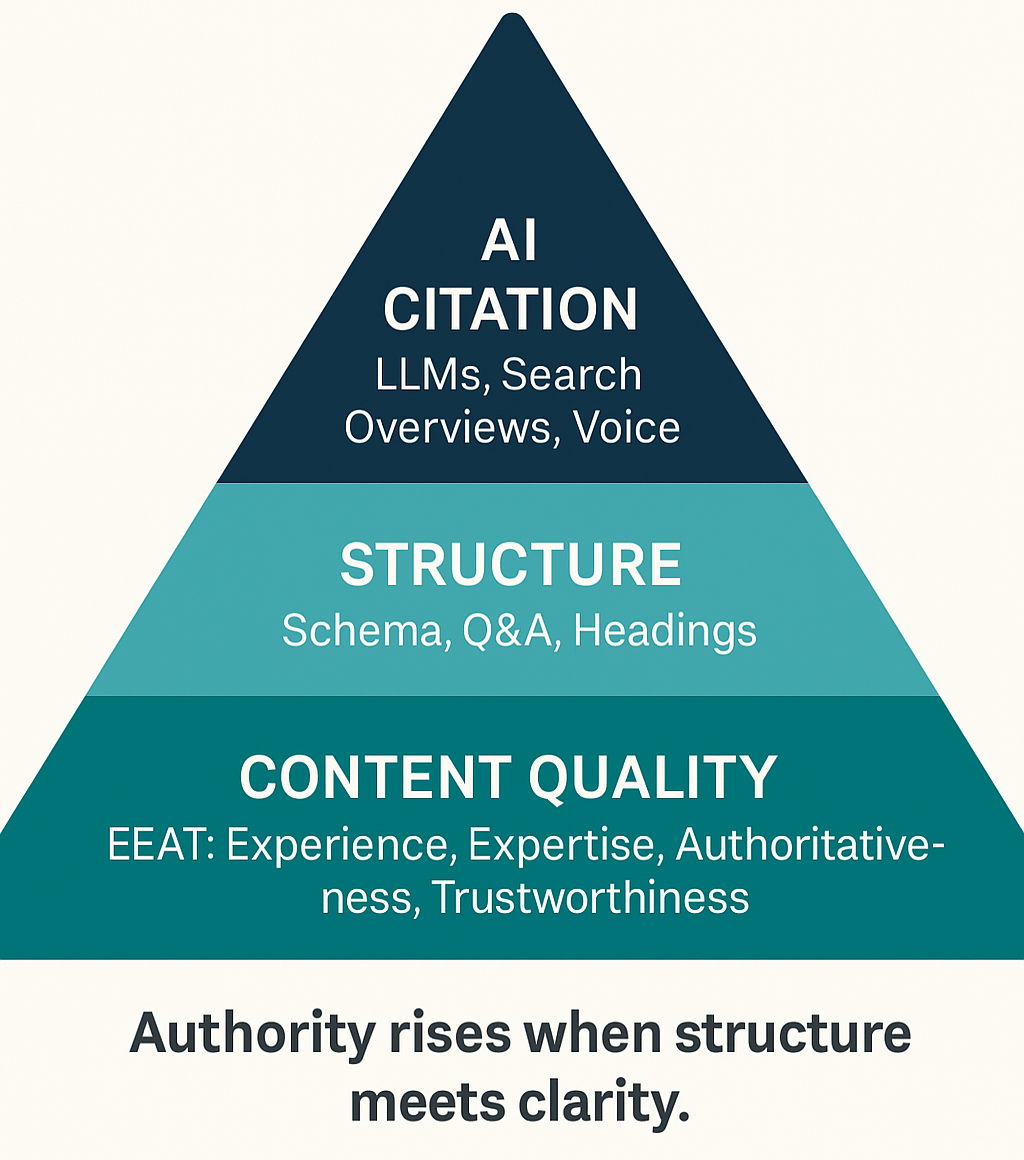
AEO doesn’t work in isolation. It depends on a strong content architecture that links every page by intent and entity. Clustered structures—where pillar pages support topic-specific clusters—allow AI and search systems to understand relationships between concepts.
For example, your Authority SEO System pillar should interlink with AIO Optimization and AEO Implementation clusters, forming a network of expertise that search engines and AI can map to your brand.
Future of Visibility: From Search to Citation
In the AI-first internet, search visibility alone isn’t enough. The future belongs to brands that can speak the language of machines without losing the tone of humans.
RR Web Services helps businesses design content ecosystems that go beyond ranking—to being cited, summarized, and remembered.
As we often tell our clients: “AEO isn’t about chasing algorithms. It’s about teaching algorithms who you are, what you know, and why your voice matters.”
If you’re ready to see how AEO can amplify your visibility, start with a Micro SEO Audit. It identifies hidden opportunities to make your content discoverable across both search and AI ecosystems.
FAQs
What is the main goal of Answer Engine Optimization (AEO)?
The goal of AEO is to make your content easily understood, cited, and summarized by AI systems and search engines. It ensures your brand appears in AI-generated answers, snippets, and voice responses — even when users don’t click through.
How does AEO improve my brand visibility?
AEO improves visibility by structuring your content for machine comprehension. When your pages provide clear, direct, and verified answers, AI systems like ChatGPT, Perplexity, or Google’s AI Overviews can surface your brand as a trusted source. This keeps your business visible even in zero-click environments.
What is the difference between AEO and traditional SEO?
Traditional SEO helps you rank within search results, while AEO helps your brand become the answer itself. SEO focuses on keywords, backlinks, and page ranking. AEO focuses on clarity, question-based structure, schema markup, and authority signals that allow AI to understand and reuse your content.
How can I make my website content AEO-ready?
Start by structuring content around user questions. Add direct, one-paragraph answers near the top of sections, use clear headings, and include FAQ schema markup. Regularly update information, link related topics, and maintain consistent brand details across your site.
Why does schema markup matter for AEO?
Schema markup gives AI and search systems structured context about your content. It helps them identify entities, topics, and relationships so your brand appears accurately in voice results, featured snippets, and AI summaries.
How does AEO relate to AI Overviews (AIO)?
AEO and AIO work together. AEO prepares your content to be selected and cited, while AIO is the interface where those citations appear. If your content is well-structured, accurate, and authoritative, AIO systems are more likely to feature it.
Can small businesses benefit from AEO?
Absolutely. AEO levels the playing field. Local and niche businesses that create precise, well-structured answers often outperform large competitors in AI-driven search. Voice search optimization and localized schema are especially effective for local visibility.
How do I know if my content is being cited by AI or answer engines?
You can check platforms like Perplexity, ChatGPT with browsing, or Google AI Overviews for branded or topic-specific queries. Tracking tools like seoClarity and Ubersuggest Profound can also help monitor AI citations and visibility patterns.
What role does trust play in AEO?
Trust determines whether AI includes your brand in its answers. Consistent brand information, expert-led content, third-party mentions, and structured data all signal authority. The stronger these signals, the more confidently AI systems will cite you.
How can RR Web Services help my brand with AEO?
RR Web Services builds AEO-ready ecosystems by combining structured content, entity-based SEO, schema markup, and brand authority systems. We help your business appear not just in search results, but inside the AI-generated answers shaping digital visibility.