10 Steps to Optimize Your Content Architecture
Most websites don’t struggle because of “bad content.” They struggle because the content sits in the wrong place, carries no structural support, or isn’t connected in a way that search engines or users can understand. Modern SEO and AI systems look for patterns, relationships, and meaning before they judge keywords or page-level signals.
Content architecture is what brings all of this together. It’s the system that turns isolated pages into a cohesive network of expertise. When your structure is clear, your content starts working together instead of competing with itself. Search engines read themes more accurately. AI systems understand your authority. And users move naturally from one useful page to the next.
Here’s a complete, human-centered breakdown of the ten steps that make your architecture strong, understandable, and built for long-term visibility.
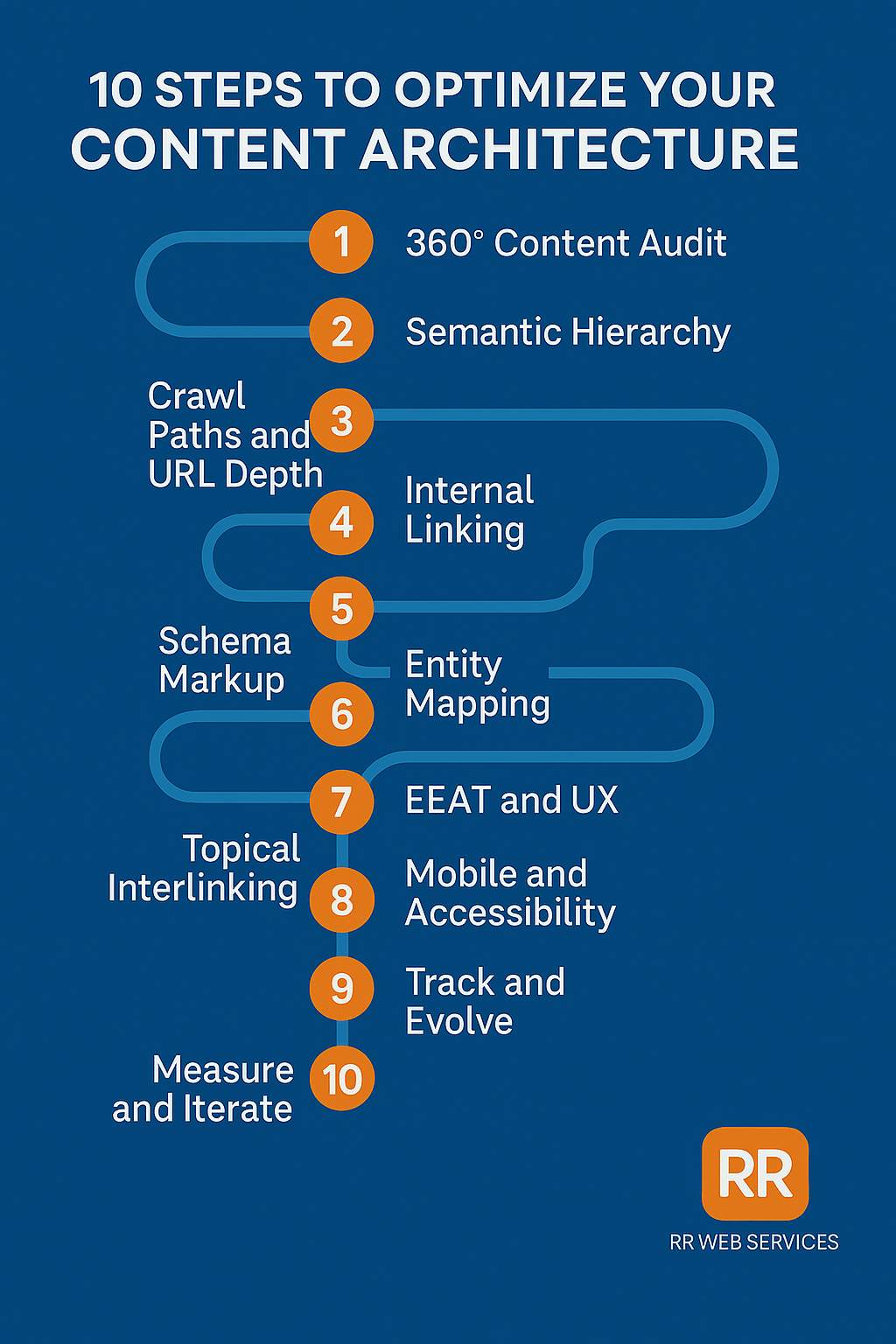
1. Conduct a 360-Degree Content Architecture Audit
Before fixing anything, you need a clear map of where you stand. Most sites accumulate content over years, and the structure silently falls apart without anyone noticing.
A full audit highlights:
-
Pages without internal links
-
Topics that overlap and cannibalize each other
-
Thin or outdated pages
-
Broken pathways that interrupt crawl flow
-
Inconsistent URL formats
-
Old pages sitting outside the core hierarchy
-
Pages that rank for the wrong intent
This is not a cosmetic exercise. An audit uncovers where your authority is leaking and where your structure is working against you, even if your content is strong.
2. Build a Semantic Hierarchy of Topics
Search engines don’t see your website through navigation menus. They understand topics, themes, and how ideas connect.
A strong hierarchy starts with:
Pillar Pages that own broad topics
Cluster Pages that explore each subtopic with depth
The key is clarity. Each page should answer one purpose, support one theme, and build toward a clear topic footprint. When the structure is built around meaning, you stop creating content “just to publish” and start building topical authority layer by layer.
This is the difference between a website with “many blogs” and a website with a recognisable expertise footprint.
3. Optimize Crawl Paths and URL Depth
Even great content fails if search engines can’t reach it easily. Crawl paths determine how quickly and accurately your site is understood.
What matters most:
-
Your important pages shouldn’t be buried.
-
URLs should be logical and readable.
-
Breadcrumbs should reflect your real structure.
-
Sitemaps should be clean and up to date.
A simple rule:
If it takes too many clicks to reach an important page, you’re hiding your own expertise.
Good architecture invites search engines in and guides them where the value lives.
4. Engineer Internal Linking for Meaning and Flow
Internal linking is often talked about as an SEO tactic, but it’s really the backbone of your architecture. It shows search engines how your ideas connect and how authority should flow across your site.
The most effective networks include:
-
Pillar to cluster
-
Cluster to pillar
-
Cluster to cluster
This creates a natural web of context, where related concepts support each other. It helps users find the next relevant step and helps algorithms understand your depth.
The right internal links don’t just move readers. They reinforce meaning.
5. Apply Layered Schema Markup to Express Meaning
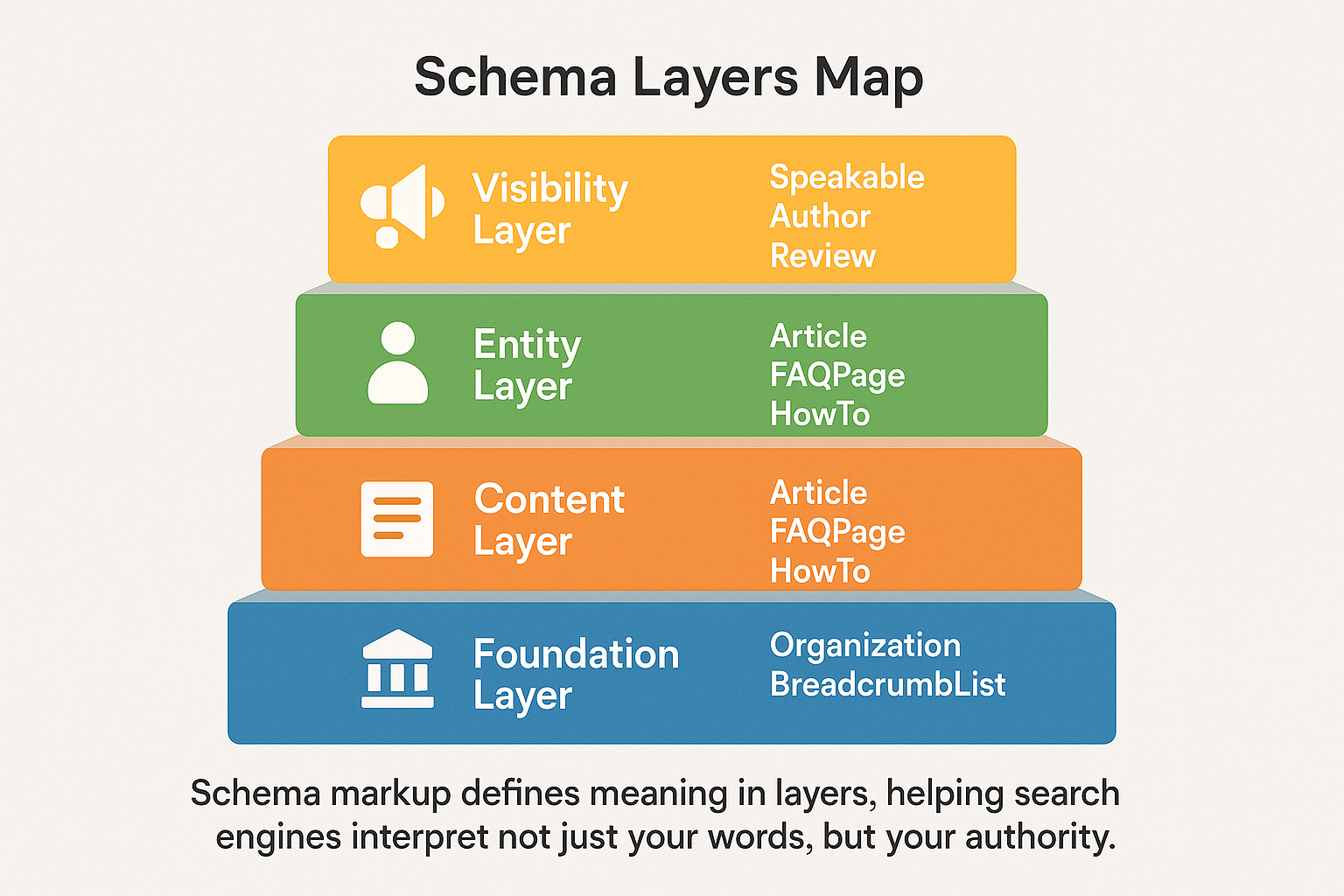
Schema doesn’t improve rankings by itself, but it radically improves understanding. It gives search engines the missing context behind your pages.
A layered approach works best:
Foundation
Organization schema and breadcrumb schema establish identity and structure.
Content
Article, FAQPage, HowTo schemas clarify purpose.
Entities
Schema for people, concepts, places, and things signal real-world meaning.
Visibility
Speakable or Review schema supports richer surfaces and AI-driven results.
Schema doesn’t replace content. It clarifies it.
6. Map Entities and Their Relationships
Search engines understand the world through entities, not strings of keywords.
If your content doesn’t define the entities you work with, you miss out on recognition and topical strength.
Strong entity mapping helps:
-
Establish your brand within a topic
-
Clarify how your themes connect
-
Align your content with knowledge graph structures
-
Strengthen AI citation potential
Your content becomes part of a larger ecosystem instead of an isolated library.
7. Blend EEAT and UX into Your Structure
Authority is not only what you say. It’s how confidently a user feels when interacting with your site.
Good structure and good UX go hand in hand:
-
Clear authorship builds trust
-
Predictable navigation helps users stay oriented
-
Strong headings guide attention
-
Clean design improves focus
-
Accessible layouts make content usable for everyone
-
Visuals, examples, and case notes help readers “feel” your expertise
When content is structured for clarity and designed for comfort, your credibility becomes easier to trust.
8. Strengthen Semantic Bridges Across Topics
Most sites publish strong pages that never connect to anything else. As a result, the expertise feels fragmented.
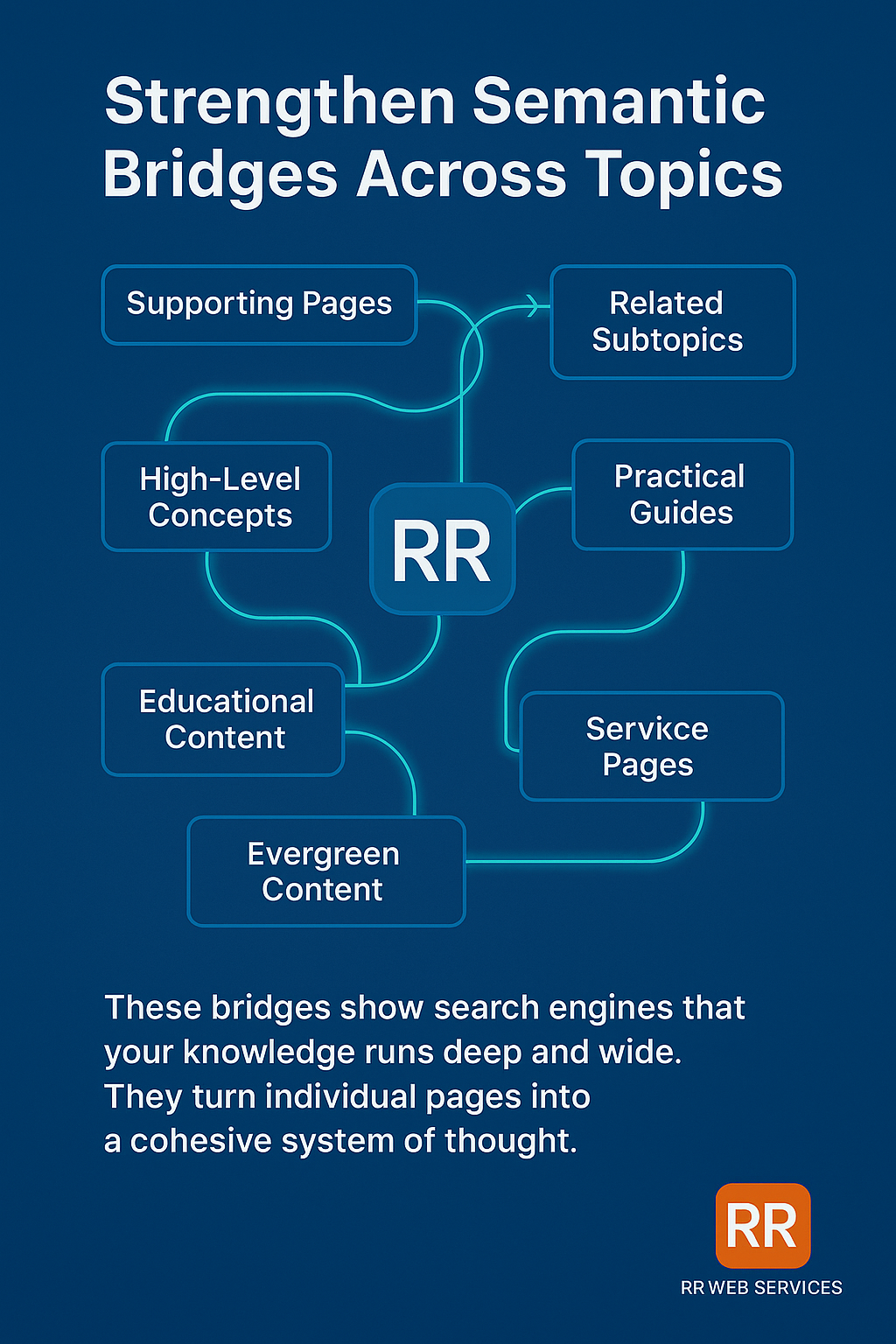
Semantic bridges fix that by linking:
-
Supporting pages across clusters
-
Related subtopics that share user intent
-
High-level concepts to practical guides
-
Educational content to service pages
-
Older content with newer context
These bridges show search engines that your knowledge runs deep and wide. They turn individual pages into a cohesive system of thought.
9. Optimize for Mobile, Speed, and Accessibility
Architecture isn’t only about structure. It’s also about performance. A slow or clunky site breaks the entire experience, no matter how well it is organized.
What you need to ensure:
-
Fast load times across devices
-
Clean mobile navigation
-
Accessible structures with proper markup
-
Proper alt text, contrast, and spacing
-
Lightweight scripts and compressed assets
A site that performs well signals reliability. It reduces friction, increases engagement, and reinforces authority.
10. Track, Measure, and Evolve Your Architecture
Architecture is not static. As new content appears, services change, or algorithms shift, your structure must adapt.
Measure continuously:
-
Are your pillars still the right ones?
-
Do any clusters need deeper supporting pages?
-
Have new opportunities emerged?
-
Are your most important pages still easy to reach?
-
Does schema reflect your current expertise?
-
Are internal links still logical?
-
Are key pages gaining visibility in AI summaries?
A strong structure evolves over time. That’s how you protect visibility and compound authority.
From Organized Content to Recognized Authority
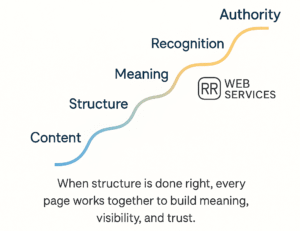
When structure, meaning, and UX move in the same direction, every page becomes part of a much bigger ecosystem. Search engines begin to trust your expertise because it’s consistent, connected, and easy to interpret. Users feel guided instead of lost. And your brand takes on a shape that algorithms can map and recognize.
This is how structure creates visibility.
And how visibility matures into authority.
FAQs
What is content architecture in SEO?
Content architecture is the way your website’s pages, topics, and links are organized so both users and search engines can understand what you’re an expert in. It’s the structural logic behind your content, not just the layout.
Why does content architecture matter for authority?
Authority builds when your content relates meaningfully to itself. A strong structure helps search engines understand your depth on a topic, which improves rankings, snippet visibility, and AI citation potential.
How does internal linking improve visibility?
Internal links connect related ideas and help search engines follow your expertise. When links are placed in context and not in isolated lists, they pass authority between pages and help algorithms discover your entire topic network.
What role does schema markup play in architecture?
Schema helps search engines interpret the purpose and meaning of your content. When layered correctly, it improves eligibility for rich snippets, strengthens entity recognition, and makes your pages easier for AI to parse.
How does EEAT influence content structure?
EEAT supports the human layer of structure. Clear authorship, expertise, and trustworthy design make your content more credible. When the structure is strong and the experience is reliable, search engines trust your site more easily.
What is entity mapping, and why does it matter?
Entity mapping defines your core topics and how they relate. It helps search engines understand exactly what your business is known for. When your entities are defined clearly, your chance of being cited in AI-generated answers increases.
How often should a site’s architecture be reviewed?
A quarterly review is ideal. Architecture should also be updated whenever you publish new clusters, add services, or expand into new topics so the structure stays coherent and current.
What tools help optimize content architecture?
Tools like Screaming Frog, Ahrefs Site Audit, Semrush, Google Search Console, Schema Markup Validator, and visual mapping tools like Miro or GlooMaps help audit, plan, and maintain your structure.
How does content architecture improve AI search visibility?
AI systems rely on structured, well-linked content to build a picture of your expertise. When your site’s architecture is clear, AI engines can interpret your topics accurately and cite your content more confidently.
Is content architecture the same as a sitemap?
No. A sitemap lists URLs. Content architecture defines how those URLs relate, how authority flows between them, and how meaning is built. A sitemap is technical, but architecture is strategic.
Tags:
content architecture