Content Architecture That Works: Turning Structure Into Meaning and Authority
A website’s strength isn’t measured by how many pages it has but by how those pages work together. In modern SEO, especially within AI-driven search ecosystems, structure isn’t a technical detail. It’s the foundation of meaning, trust, and visibility.
At RR Web Services, we treat content architecture as more than navigation. It is how information, expertise, and authority connect across your site so that both users and search engines can understand your intent. When done right, structure transforms isolated content into a living network of relevance.
Why Content Architecture Matters for Visibility and Trust
Search engines and AI systems no longer just read words. They interpret relationships. They analyze how one page connects to another, how topic clusters reinforce expertise, and how schema builds context.
A strong content architecture gives your brand three distinct advantages:
-
Clarity: Search engines instantly understand your topical focus.
-
Connectivity: Related topics reinforce one another and build depth.
-
Consistency: Your message stays coherent across every piece of content.
In essence, content architecture is what turns your website from a collection of pages into a recognized authority.
The Foundation: Pillars, Clusters, and Hierarchy
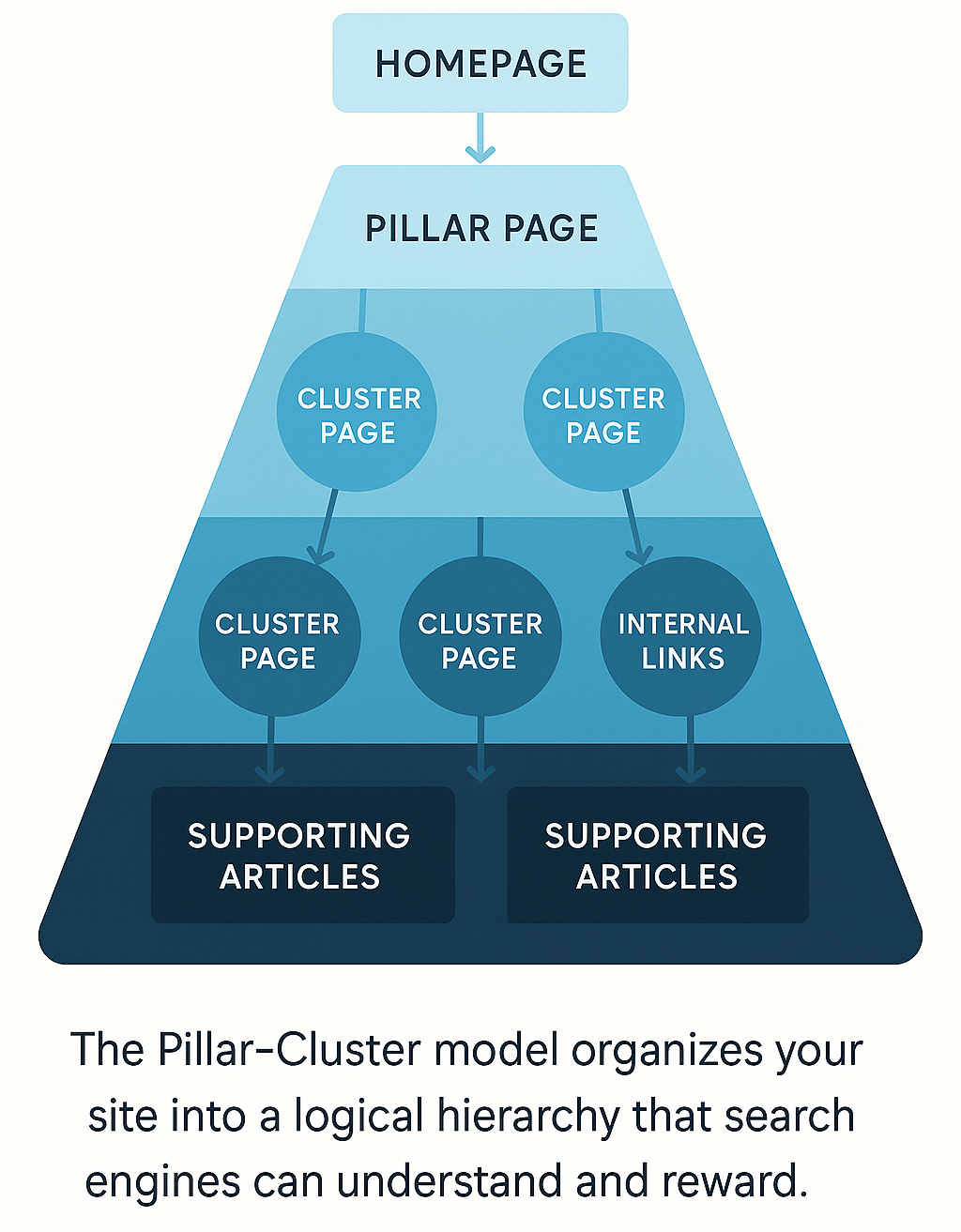
Every effective content system is built on a simple framework of pillars, clusters, and logical linking. This content architecture framework allows your content to flow naturally from broad subjects to deeper insights.
-
Pillar Pages are your main authority hubs. They cover comprehensive topics like Content Strategy, Authority SEO, or Entity Optimization.
-
Cluster Pages support the pillar by exploring narrower subtopics such as Topic Mapping or Schema Implementation.
-
Internal Links connect everything and help both readers and crawlers follow the relationships between ideas.
Together, these layers create a logical pathway from discovery to conversion. To build this system, start by mapping your key topics based on real user intent rather than keywords alone, and assign each to its proper level in your hierarchy.
How Structure Builds Meaning for Search and AI
Traditional SEO was about ranking a single page. Modern SEO focuses on helping systems like Google, Perplexity, and ChatGPT understand entities and relationships across your entire site.
When your content is interlinked and supported by schema, these systems recognize it not as fragmented text but as a structured network of expertise. This makes your brand more likely to appear in AI-generated summaries and rich search results.
For example, an article on Topic Mapping that links to pages about Entity SEO and Schema Implementation signals completeness. AI models detect that your content covers the full ecosystem of structured strategy and treat your brand as a reliable source.
Internal Linking: The Pathway to Authority
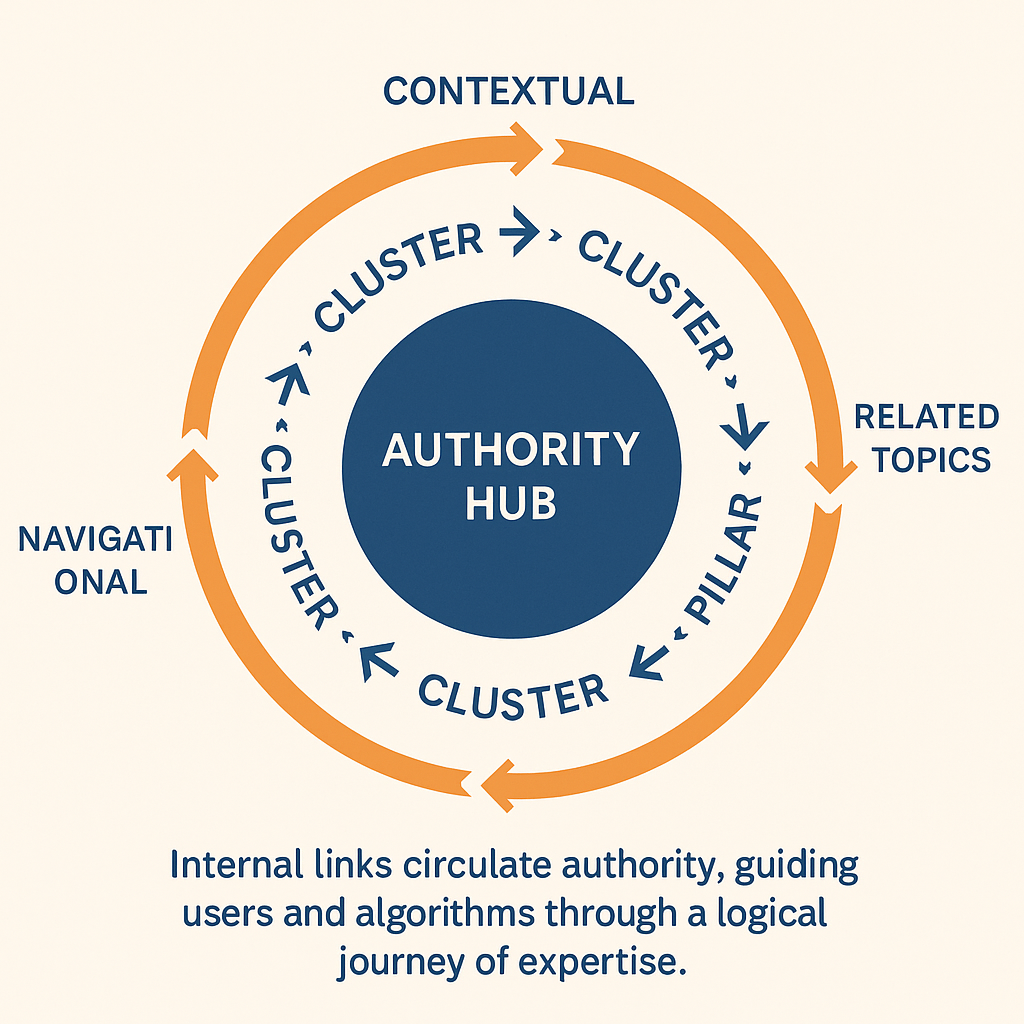
Internal linking is far more than simple navigation. It’s how authority circulates throughout your site. Every link tells search engines what matters most and how ideas connect.
A well-planned linking system balances three types of movement:
-
Pillar to Cluster: guiding readers from broad themes to detailed insights.
-
Cluster to Pillar: reinforcing where each topic belongs.
-
Cluster to Cluster: linking related content to create fluid exploration.
For instance, an article about Content Architecture can naturally link to pages on Schema, EEAT, or Topic Mapping. These connections strengthen semantic clarity for search engines while providing value to readers.
Anchor text should always fit the context of the sentence. Instead of generic phrases, use meaningful references such as “see how schema enhances content clarity.”
Schema: Translating Structure into Meaning
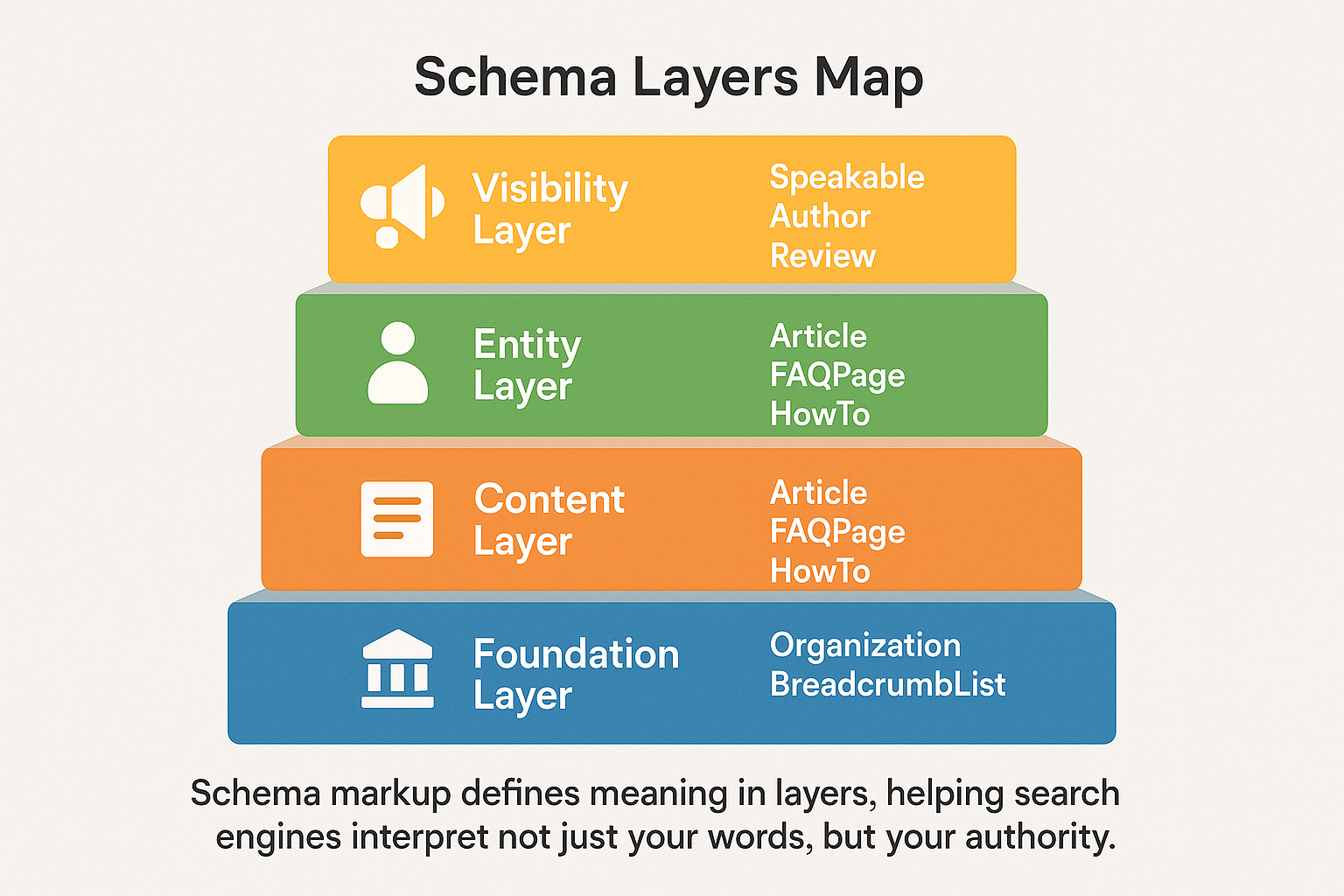
Schema markup gives search engines a precise understanding of your site. It explains what each page represents and how it relates to others.
At RR Web Services, we use a layered approach to schema:
-
Foundation Layer: Defines your organization and navigation through Organization and BreadcrumbList schema.
-
Content Layer: Adds relevant schema for each page type such as Article, HowTo, or FAQPage.
-
Entity Layer: Highlights the people, topics, and entities that define your authority.
-
Visibility Layer: Includes Speakable and Author schema for improved voice and AI recognition.
This method ensures your brand is perceived as an interconnected system of expertise. For a deeper explanation, refer to our guide on Entity SEO and Schema Foundations.
Entity Mapping: The Core of Expertise Recognition
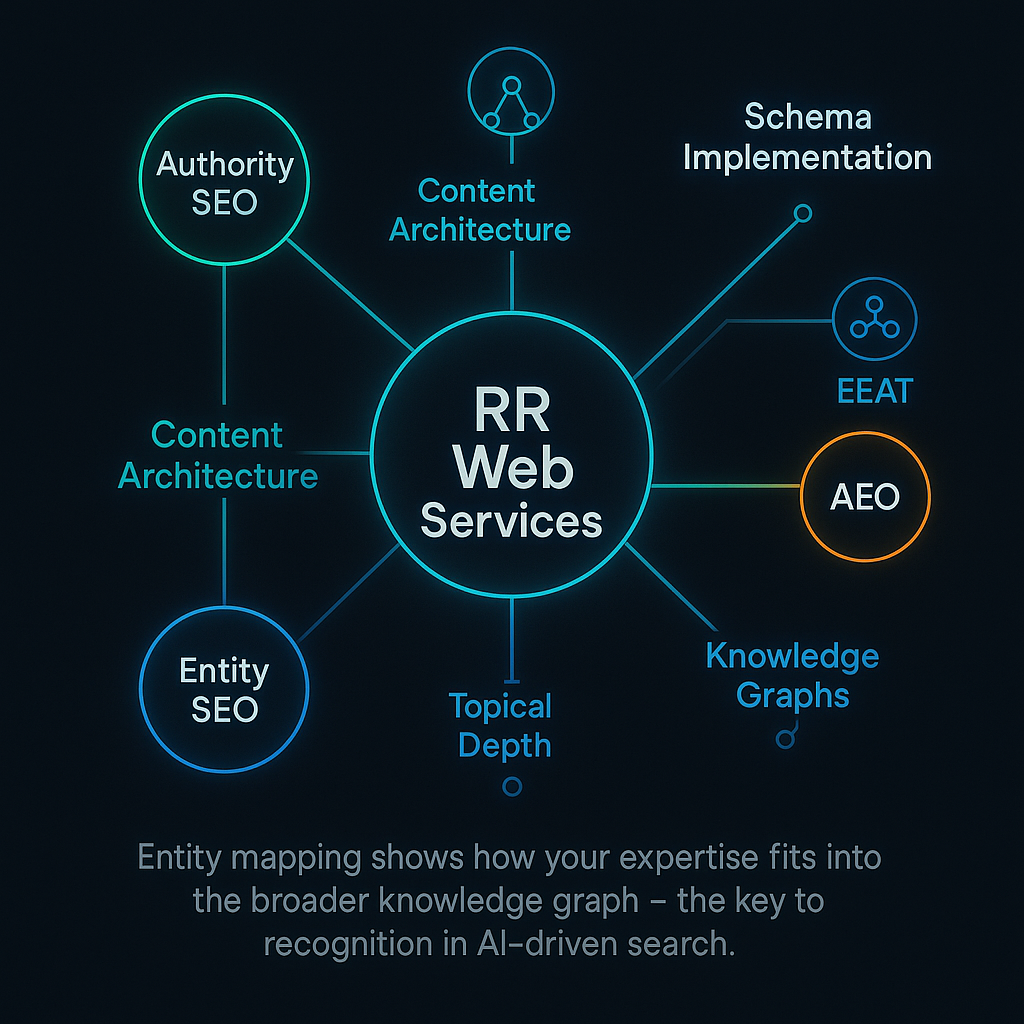
Entities are the language of AI-driven search. They represent identifiable concepts that define what your brand knows best.
Entity mapping connects these concepts into a coherent knowledge web. For RR Web Services, primary entities include Authority SEO, Content Architecture, Entity SEO, AEO, and Schema Implementation.
When these are linked together through structured data and contextual references, search engines form a detailed map of your brand’s expertise. This approach increases visibility across search results and AI platforms alike.
EEAT and UX: The Human Layer of Structure
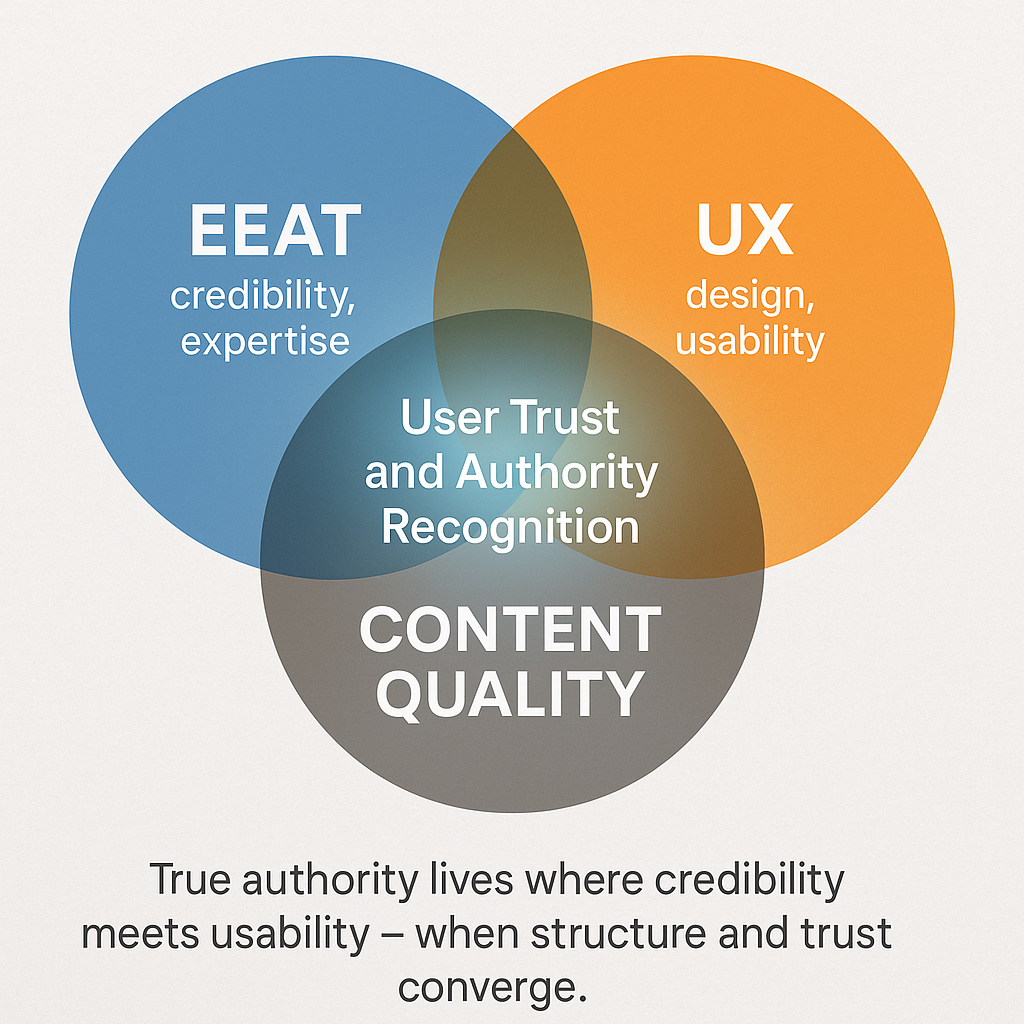
Architecture alone cannot build trust. Your content must also demonstrate Experience, Expertise, Authoritativeness, and Trustworthiness, all while maintaining strong user experience.
A clear, intuitive structure reinforces these signals. When visitors easily find what they need and stay engaged, algorithms read it as trust.
-
Experience is shown through real-world examples and case studies.
-
Expertise comes through detailed, accurate content written by qualified voices.
-
Authoritativeness is built through consistency and internal validation.
-
Trustworthiness is reflected in clear design, transparency, and accurate updates.
For more depth on this connection, explore our editorial on EEAT and UX: How Trust Drives Visibility, which shows how credibility and usability amplify one another.
Case Study: From Flat Pages to a Structured Authority
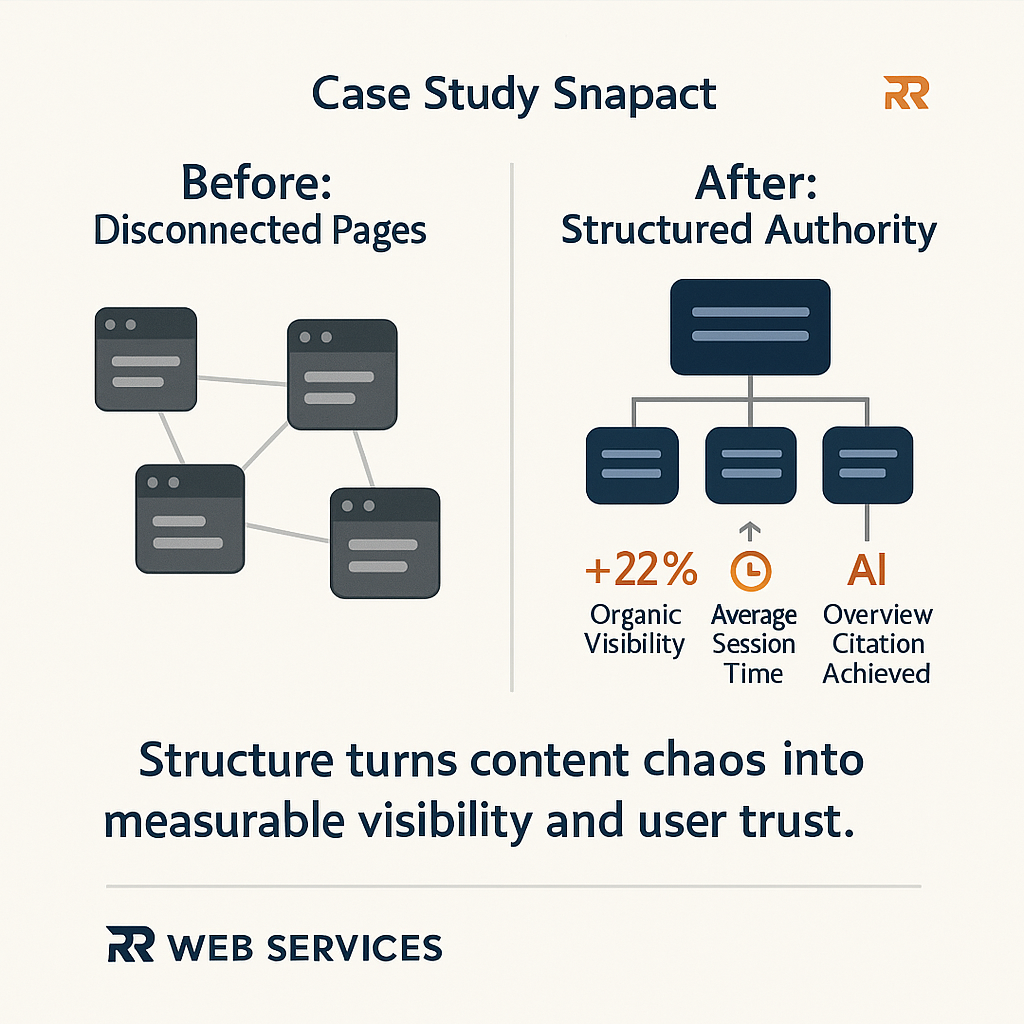
A B2B SaaS client approached us with over a hundred disconnected blog posts. The content was valuable but scattered, which meant neither users nor search engines could see its full depth.
Our solution began with structure. We:
-
Created four pillar pages mapped to the client’s service areas.
-
Grouped related blogs under each pillar as clusters.
-
Implemented schema for all major content types.
-
Built an internal linking map that mirrored the buyer journey.
Within four months:
-
Organic visibility rose by 22 percent.
-
Average time on site increased by 31 percent.
-
Multiple FAQ and HowTo snippets appeared in Google results.
-
The brand earned its first citation in AI Overviews.
Structure turned fragmented content into a system of meaning that search engines could recognize and users could trust.
From Organized Content to Recognized Authority
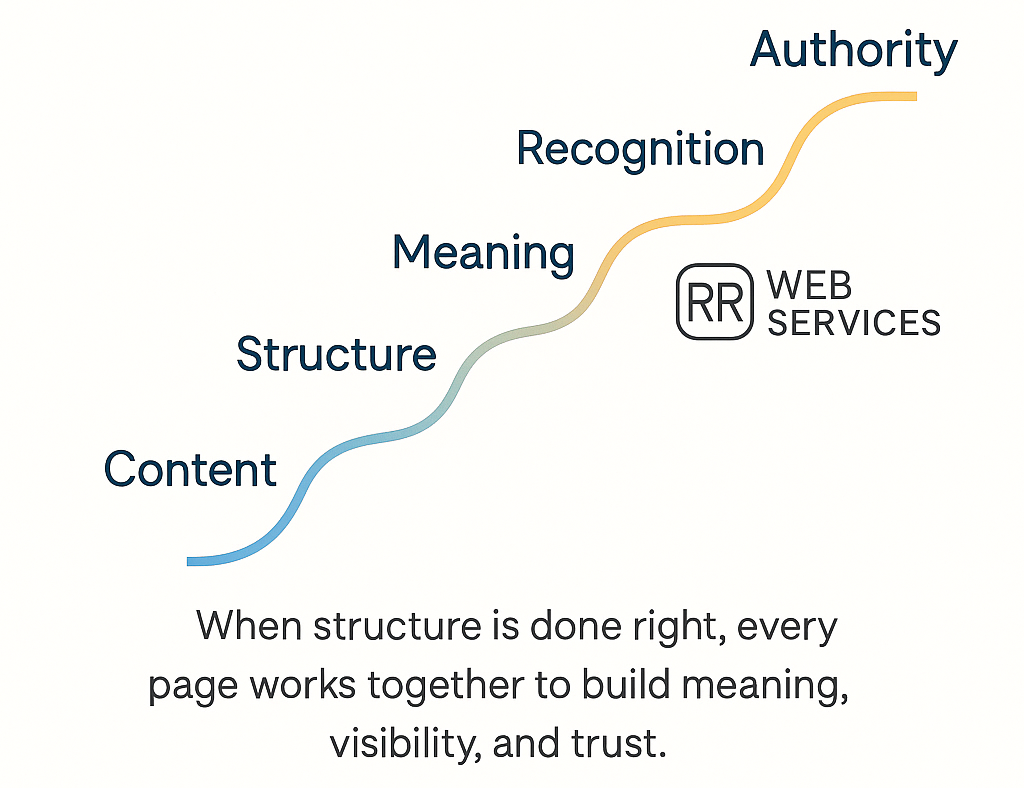
The most visible websites are not those with the most content, but those with the most clarity. When every page is structured, interlinked, and defined through schema, your website evolves from being found to being recognized.
Each page becomes a statement of expertise. Each link strengthens understanding. Each markup adds another layer of context.
This is how architecture transforms into authority.
FAQs
What is content architecture in SEO?
Content architecture is the way information on your website is structured and connected. It organizes topics and links them together so that both users and search engines can understand your expertise.
How does content architecture improve rankings?
A clear structure helps search engines understand relationships between pages and distribute link equity. It enhances topical authority and increases the chances of being featured in AI and search results.
What’s the difference between content architecture and website design?
Design determines how a website looks and feels. Architecture defines how its information flows. Both should work together to guide users through a logical, meaningful journey.
Why are internal links important?
Internal links guide users and search engines toward related information. They help establish relationships between topics and ensure that authority flows throughout your content ecosystem.
How does schema markup help?
Schema communicates the meaning of your pages to search engines. It defines what a page represents and how it relates to other content, improving your chances of appearing in enhanced search results.
What is entity mapping?
Entity mapping connects your key topics, terms, and ideas into a single framework. It shows search engines how your expertise fits within a wider context, boosting credibility and AI visibility.
How does EEAT connect with content structure?
EEAT principles are expressed through clear, consistent, and accurate content. A logical structure helps users trust what they’re reading, which strengthens credibility in both human and algorithmic evaluation.
Can content architecture improve AI visibility?
Yes. AI-driven systems prefer structured and interlinked content because it’s easier to interpret. Clear architecture, schema, and entity connections help your brand appear in AI-generated results.
How often should you review your content architecture?
A review every six months is ideal. Update your structure as new pages are added so that everything remains connected, current, and optimized for both users and AI.
What is the first step toward better content architecture?
Start with a full audit of your existing content. Group related topics, strengthen internal links, apply schema markup, and ensure your hierarchy reflects user intent. This sets the foundation for lasting visibility.