How to Turn Guest Posts into Lead Generation and Client Acquisition
Guest posting is often discussed as a way to earn backlinks or expand reach. In practice, it can do far more than that. When approached strategically, guest posts can become a reliable channel for lead generation and client acquisition.
The difference lies in intent. Most guest posts are written to be published. Effective guest posts are written to guide the right reader toward a next step. That step may not always be an immediate sale, but it should move the reader closer to a relationship with your brand.
Experienced teams treat guest posting as part of a broader acquisition system, not a standalone SEO tactic. Every placement, publication, and link is evaluated through the lens of trust, relevance, and conversion potential.
Optimizing Guest Posts for Lead Capture Without Hurting Editorial Value
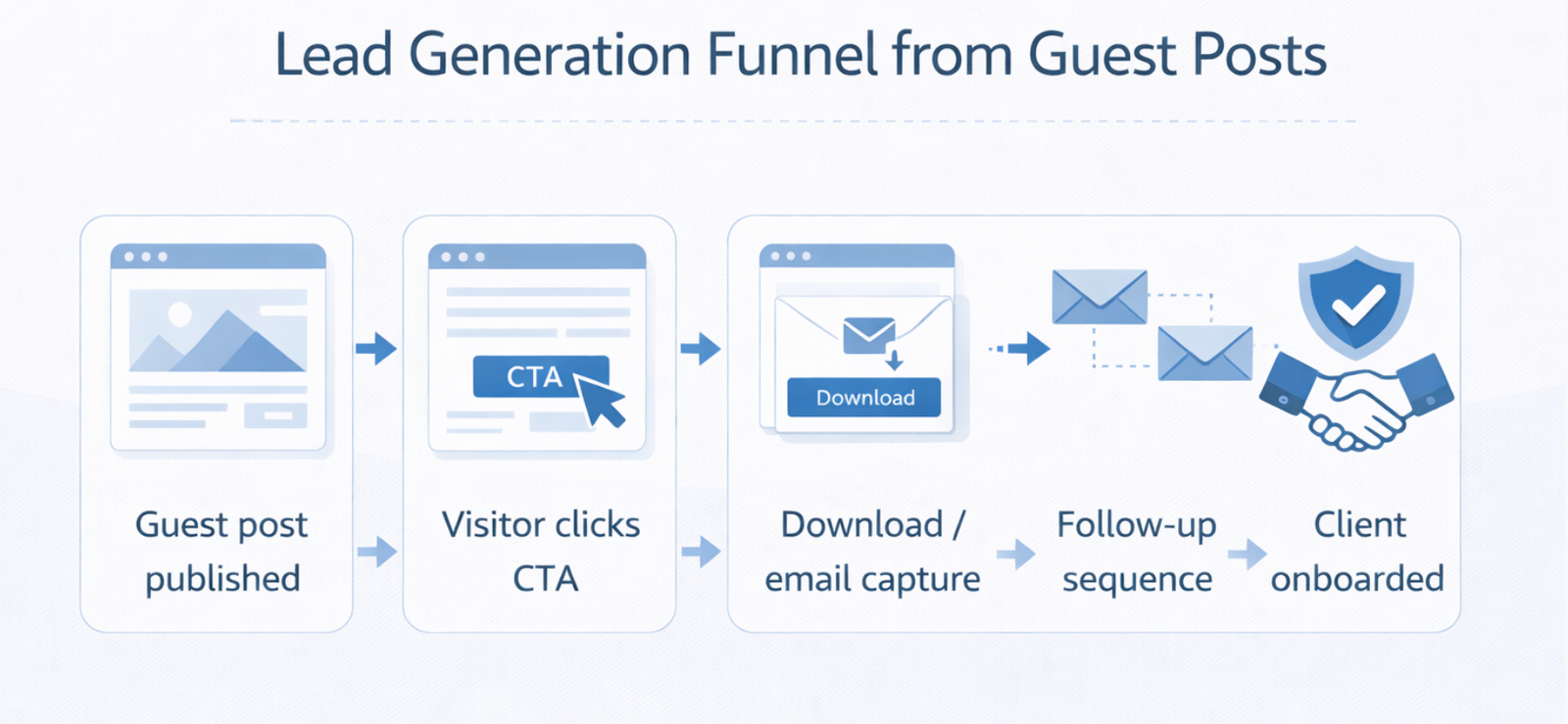
The most common mistake with guest posting for leads is trying to force conversion elements into placements that are meant to be editorial first. Editors protect their audience, and readers are quick to disengage when content feels self-serving.
The goal is not to “insert a CTA.” The goal is to earn the right to suggest a next step.
Strategic Calls to Action That Convert
Effective CTAs are context-driven and value-aligned. Generic prompts such as “Contact us” or “Visit our website” rarely perform well because they do not address a specific reader need.
Stronger CTAs are framed as solutions to the exact problem discussed in the article. For example, offering a technical SEO checklist after discussing common site health issues, or a content audit template after outlining structural content mistakes.
The CTA should feel like a continuation of the article, not a departure from it.
Lead Magnets That Match Reader Intent
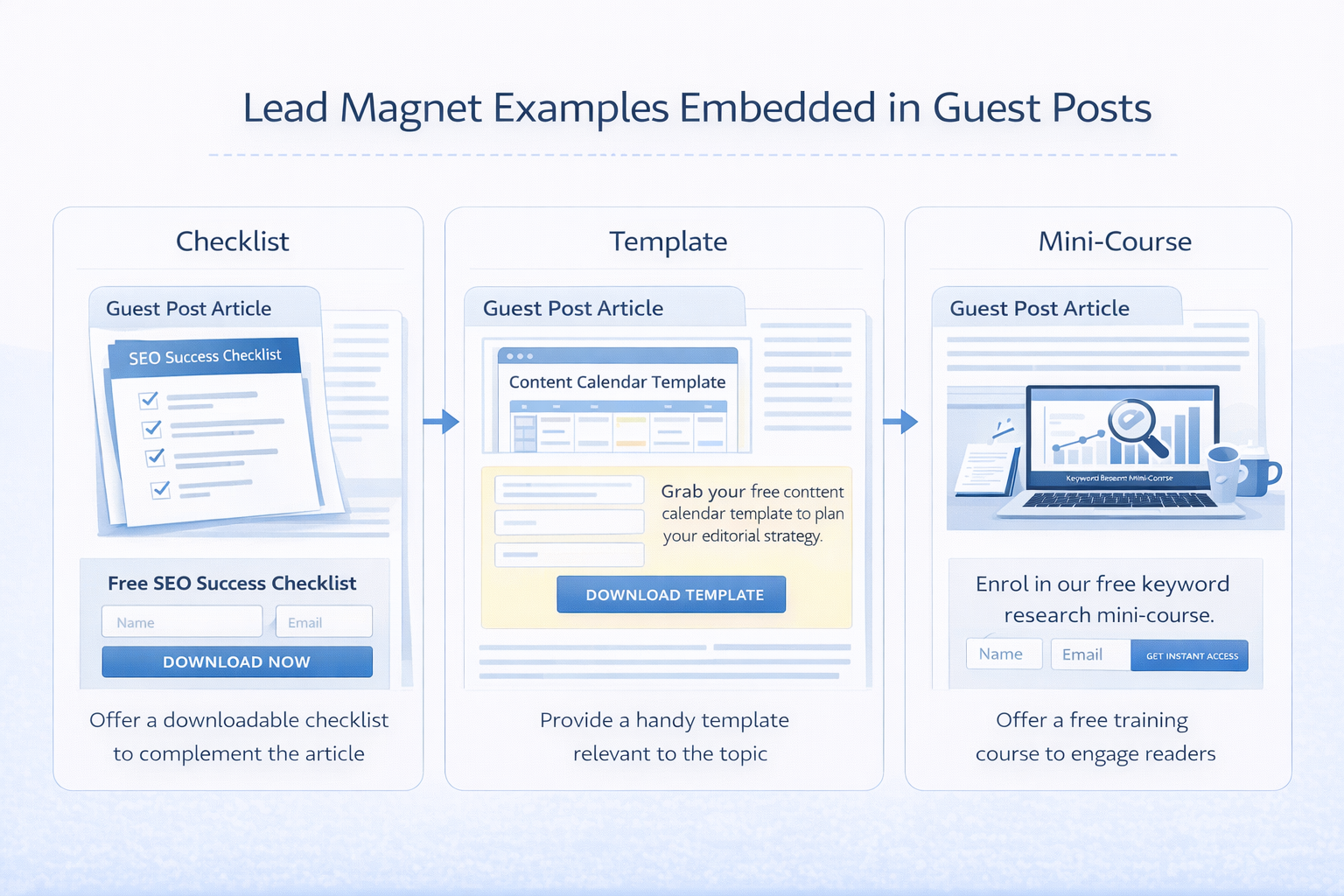
Lead magnets work best when they are tightly scoped and immediately usable. Templates, short audits, checklists, and diagnostic tools outperform broad guides or vague promises.
Importantly, not every guest post needs a gated asset. In high-authority publications, subtle positioning and an optimized author bio may convert better than an aggressive lead capture attempt. Experienced teams adjust the depth of conversion based on the editorial environment.
Author Bios as Trust Anchors
The author bio is often the most overlooked conversion asset. It should not be treated as an afterthought.
A strong bio reinforces credibility, clarifies who the content is for, and points readers toward a relevant next step. Instead of listing credentials, effective bios communicate expertise through outcomes and focus areas, then link to a page designed specifically for that audience.
Using Guest Posts Within a Broader Client Acquisition Strategy
Guest posting becomes significantly more powerful when it is integrated into a defined acquisition funnel.
Rather than asking whether a guest post “performed well,” experienced teams ask where it fits in the buyer’s journey and what role it plays in building trust over time.
Audience Selection Over Traffic Volume
High traffic does not guarantee qualified leads. Publications with smaller but more focused audiences often generate higher conversion rates because the content reaches decision-makers rather than casual readers.
The most effective guest posts appear where the reader already has the problem you solve and is actively seeking clarity.
Editorial-First vs Conversion-First Placements
Not all guest posts should be optimized for direct lead capture.
Some placements are designed to:
- Establish authority
- Build credibility through association
- Introduce your expertise to a new audience
Others are designed to:
- Drive opt-ins
- Book consultations
- Generate sales conversations
Blending these two goals into a single post often weakens both. Senior teams plan guest posting in tiers, with clear intent behind each placement.
Nurturing Leads Beyond the Click
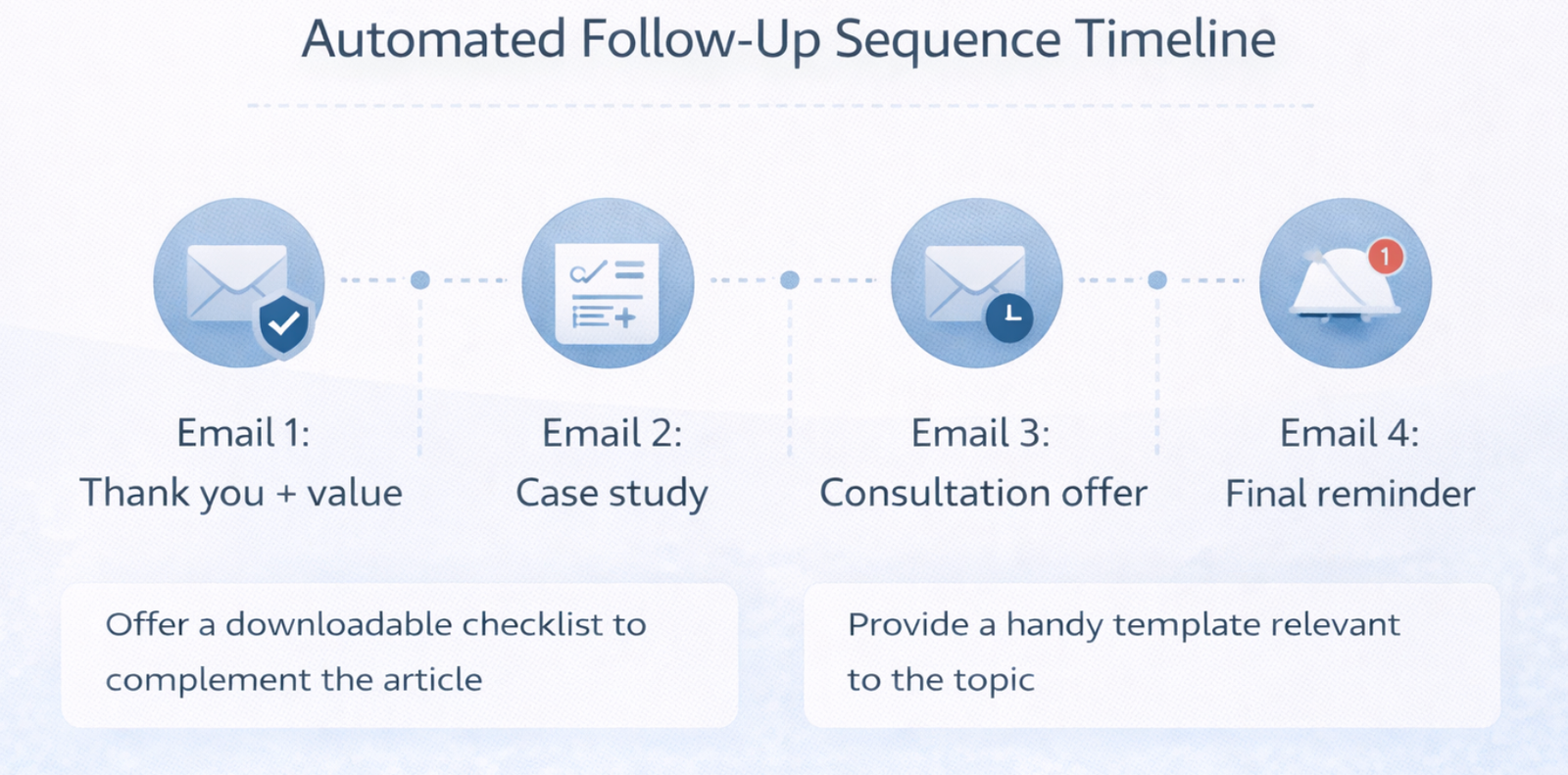
A guest post rarely converts a reader into a client on its own. What happens after the click matters just as much.
Email sequences, follow-up content, and case studies should be designed to continue the conversation started by the guest post. This ensures that interest is nurtured rather than wasted.
Real-World Patterns From Lead-Generating Guest Posts
Across industries, certain patterns consistently emerge.
A guest post targeting small business owners that addressed common technical SEO blind spots included a short diagnostic audit offer. The initial version converted modestly. After refining the CTA to focus on clarity rather than optimization, conversion rates improved significantly.
In another case, a SaaS-focused guest post offered a downloadable onboarding checklist. While the checklist itself performed well, the highest-quality leads came from a follow-up article published on the same platform weeks later, reinforcing the importance of repeated exposure and trust building.
These outcomes highlight an important truth: guest posting works best when viewed as a relationship-building channel, not a transactional one.
Trust Transfer: Why Some Guest Posts Convert and Others Don’t
One of the least discussed factors in guest post lead generation is trust transfer.
Readers do not evaluate your content in isolation. They subconsciously borrow trust from the host publication and apply it to the author. When the host is selective, respected, and editorially strong, that trust flows naturally. When it is not, even high traffic fails to convert.
This is why placements on well-regarded niche sites often outperform generic high-traffic blogs. Authority, not exposure, drives qualified action.
When Guest Posts Should Not Be Used for Lead Generation
Not every guest post should be optimized for leads.
If the publication:
- Strongly limits promotional language
- Serves an early-stage or exploratory audience
- Prioritizes education over solutions
Then the primary goal should be authority and positioning, not conversion.
Trying to force lead capture in these environments often reduces acceptance rates and damages long-term relationships. Experienced teams recognize when restraint produces better outcomes.
Tracking and Attributing Leads From Guest Posts
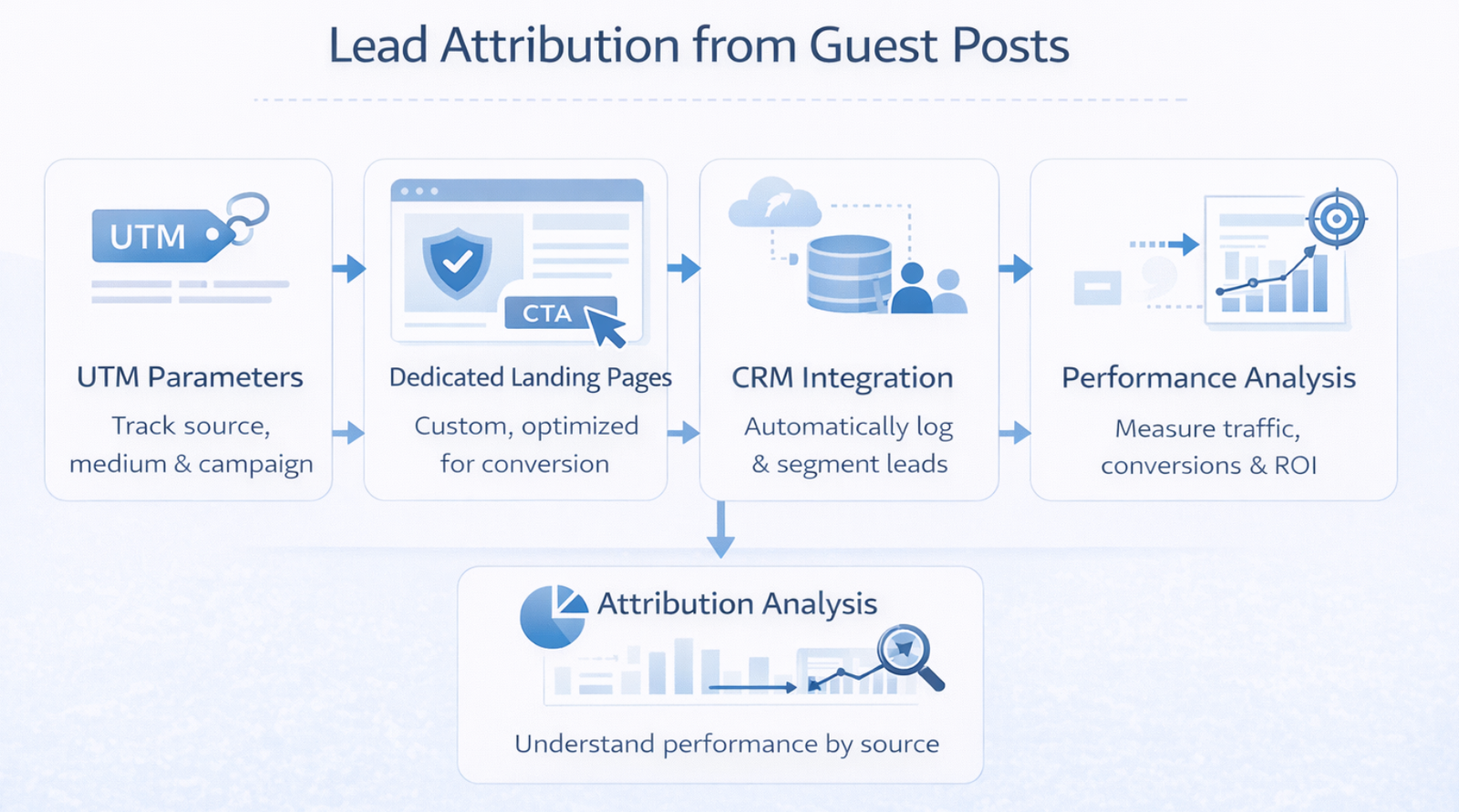
Measurement is essential, but it must be interpreted correctly.
UTM parameters, dedicated landing pages, and CRM attribution help identify which placements generate activity. However, attribution should consider assisted conversions and delayed decision-making.
Many high-quality leads convert weeks or months after first exposure. Reviewing guest post performance solely on immediate conversions underestimates its true impact.
Common Mistakes That Limit Guest Post ROI
Several patterns consistently undermine guest post lead generation:
- Prioritizing DR or traffic over audience relevance
- Treating every guest post as a sales opportunity
- Ignoring editorial context and reader expectations
- Measuring success only by clicks instead of conversations
- Failing to align post content with the actual service offering
Avoiding these mistakes often produces better results than adding more placements.
The RR Web Services Perspective
Guest posting is not about being everywhere. It is about being present in the right places, with the right message, at the right moment.
When guest posts are aligned with intent, supported by trust, and connected to a thoughtful acquisition strategy, they become more than content placements. They become entry points into long-term client relationships.
This is how experienced teams turn visibility into credibility, and credibility into growth.
FAQs
Can guest posting really generate clients, not just traffic or backlinks?
Yes, when guest posting is planned as part of a broader acquisition strategy. Guest posts generate clients when they appear on sites your ideal buyers already trust, address real problems those buyers face, and guide readers toward a relevant next step. Traffic alone rarely converts. Trust, relevance, and timing are what turn visibility into conversations and conversations into clients.
How long does it usually take to see leads from guest posting?
Guest posting rarely produces instant results in isolation. Some placements generate enquiries within days, while others contribute quietly to authority and convert weeks or months later. In most cases, consistent lead flow starts appearing after multiple placements across aligned publications, especially when supported by follow-up content, email nurturing, and clear positioning.
Should every guest post include a call to action?
Not always. The decision depends on the publication, audience maturity, and editorial environment. In authority-driven or highly selective publications, subtle positioning through the author bio or contextual references often works better than overt CTAs. More commercial placements can support lead magnets or consultation offers. Experienced teams choose restraint when it improves long-term outcomes.
What type of lead magnet works best in guest posts?
The most effective lead magnets solve a specific, immediate problem discussed in the guest post. Practical assets such as audits, templates, diagnostic checklists, or short frameworks tend to perform best. Broad guides or generic offers usually underperform because they lack urgency and relevance.
How do you decide which sites are worth guest posting on?
We evaluate sites beyond surface metrics like DR or traffic. Editorial quality, audience relevance, trust signals, publishing standards, and long-term brand alignment matter more than raw numbers. A smaller, respected site in the right niche often delivers better leads than a large site with a general audience.
Can guest posts work for service-based businesses, not just SaaS or content brands?
Absolutely. Guest posting works particularly well for service-based businesses when content addresses real operational or strategic challenges faced by decision-makers. Consulting firms, agencies, and professional services benefit when guest posts demonstrate clarity, experience, and problem-solving depth rather than overt promotion.
How do you track whether a guest post actually leads to clients?
We use a combination of UTM tracking, dedicated landing pages, CRM attribution, and assisted conversion analysis. However, we also look beyond direct attribution. Many leads reference guest posts during sales conversations even when the conversion occurs later through another channel. Qualitative feedback often complements quantitative tracking.
Is guest posting still safe and effective from an SEO perspective?
When done correctly, guest posting remains safe and effective. The risk comes from low-quality placements, paid link schemes, and irrelevant sites. Editorial-first guest posting on relevant, reputable publications aligns with Google’s guidelines and supports both authority building and organic visibility.
How many guest posts are typically needed to see meaningful results?
There is no fixed number. Results depend on site quality, audience alignment, and consistency. A few well-placed articles on trusted platforms can outperform dozens of low-impact placements. We focus on building momentum through thoughtful placement rather than chasing volume.
Should guest posting replace other marketing channels?
No. Guest posting works best as part of a diversified strategy. It complements content marketing, SEO, email nurturing, and direct outreach. When integrated properly, it strengthens all of them by increasing trust and recognition at multiple touchpoints.