

When a website struggles, “bad content” is rarely the cause. Usually the content sits in the wrong place, carries no structural support, or isn’t connected in a way that search engines or users can understand. Modern SEO and AI systems look for patterns, relationships, and meaning before they judge keywords or page-level signals.
Here are the ten steps that make your architecture strong, easy to understand, and built for long-term visibility.
What content architecture is and why it matters
Content architecture is the way your website’s pages, topics and links are organized and connected, so that users and search engines can see what you’re an expert in. It matters because search engines and AI systems judge a site by how its pages relate to each other, and a clear structure is what lets them recognize your expertise and trust it.
These systems look at how one page connects to another, how topic clusters reinforce each other, and how schema adds context. When your structure is clear, your content works together instead of competing with itself. A strong architecture gives you three advantages:
-
Clarity: search engines quickly understand your topical focus.
-
Connectivity: related topics reinforce one another and build depth.
-
Consistency: your message stays coherent across every piece of content.
It also helps to know what architecture isn’t. Design decides how a site looks and feels, and a sitemap lists your URLs. Architecture decides how information flows between those URLs and how authority moves with it. For the bigger picture of how this scales on large sites, see our guide to scalable search architecture.
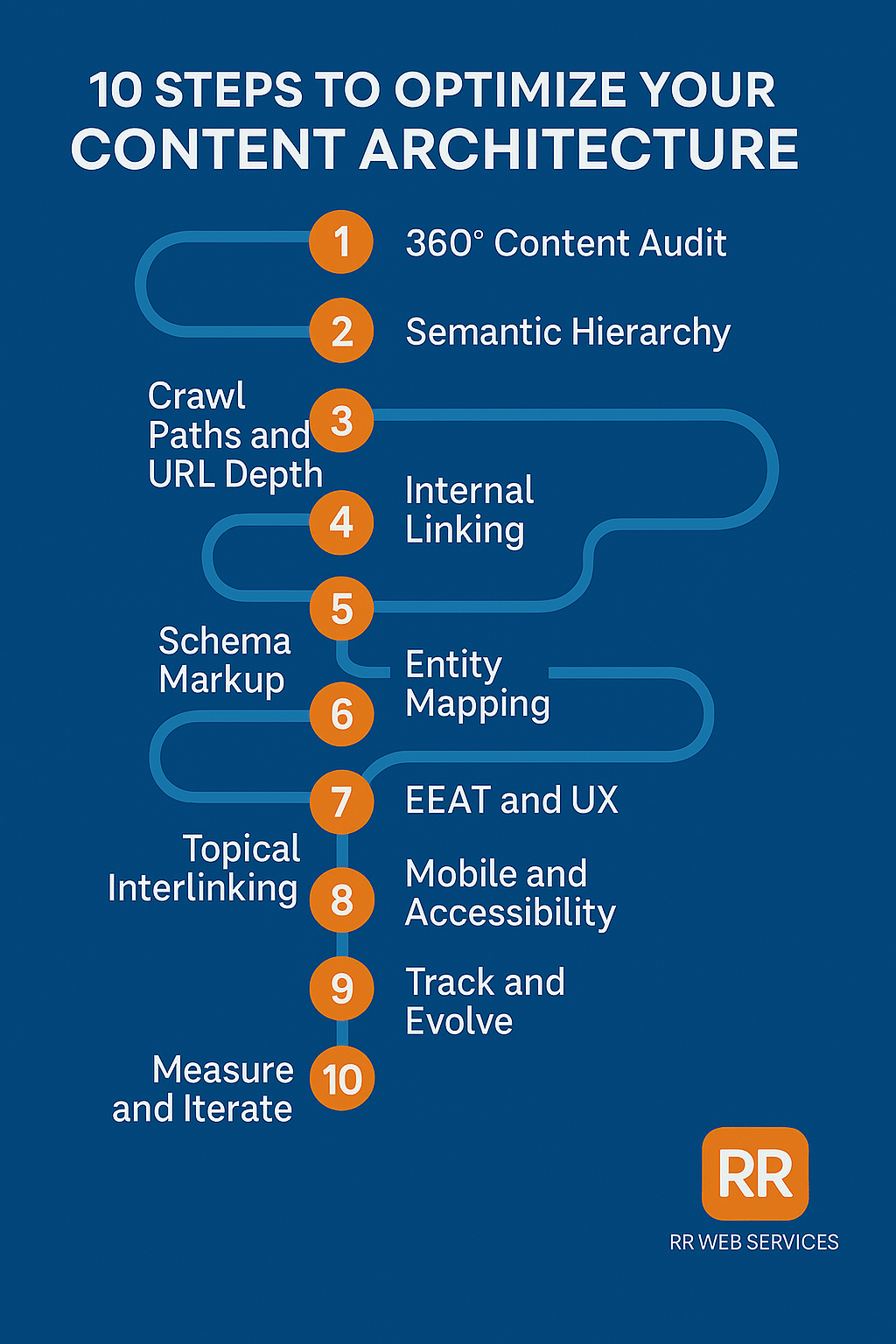
1. Conduct a 360-degree content architecture audit
Before fixing anything, you need a clear map of where you stand. Most sites accumulate content over years, and the structure silently falls apart without anyone noticing.
A full audit highlights:
-
Pages without internal links
-
Topics that overlap and cannibalize each other
-
Thin or outdated pages
-
Broken pathways that interrupt crawl flow
-
Inconsistent URL formats
-
Old pages sitting outside the core hierarchy
-
Pages that rank for the wrong intent
An audit shows where your authority is leaking and where your structure is working against you, even if your content is strong. If you’d like an outside view, request an SEO Clarity audit of your site.
2. Build a semantic hierarchy of topics
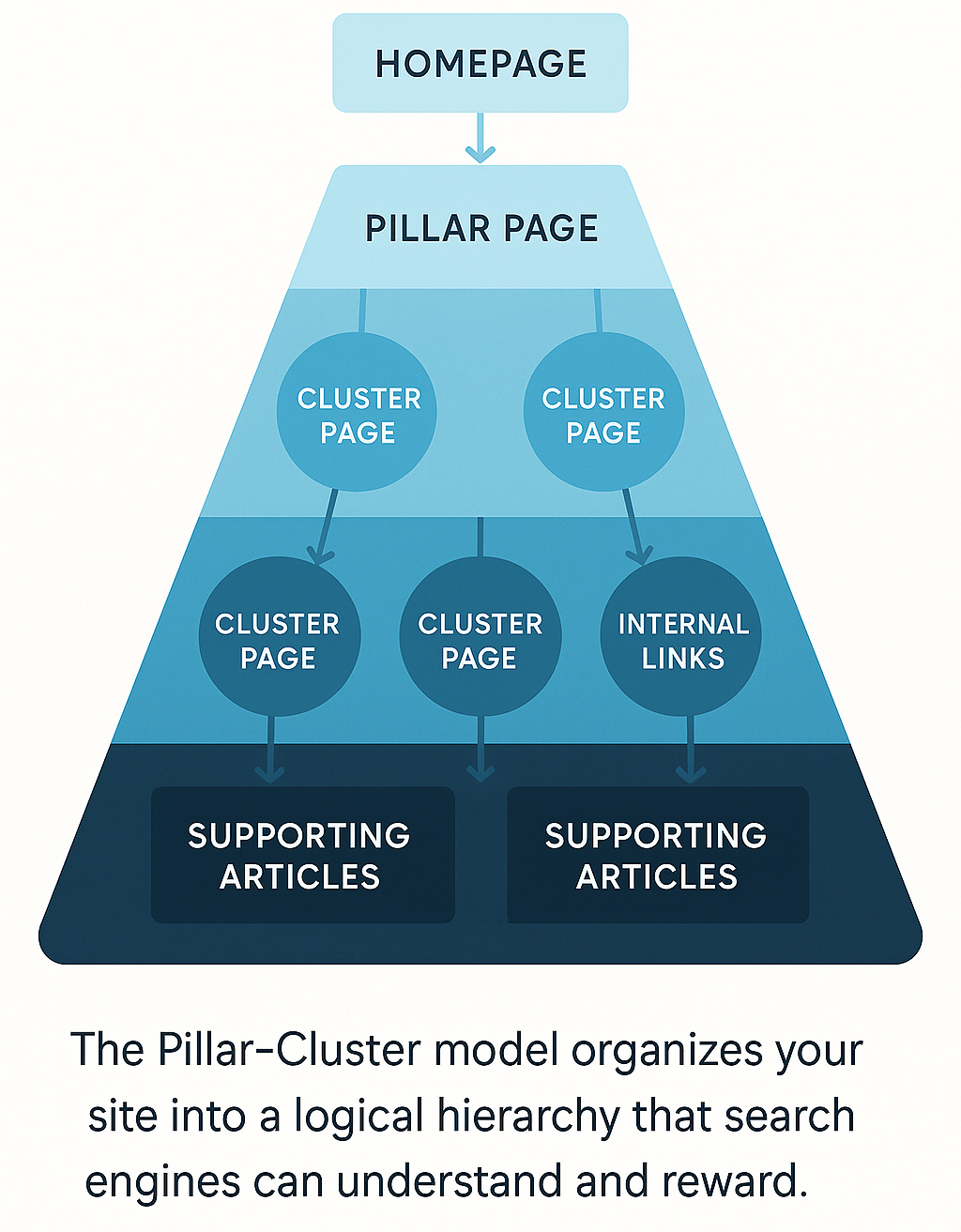
Search engines read a website through its topics, its themes, and how its ideas connect.
A strong hierarchy starts with:
Pillar pages that own broad topics, such as content strategy, authority SEO or entity optimization
Cluster pages that explore each subtopic in depth, such as topic mapping or schema implementation
Start by mapping your key topics around real user intent rather than keywords alone, then give each one its level in the hierarchy. Our topical map template walks through this. To see which of your pages already compete for the same searches, try our free Keyword Cannibalization Checker.
The key is clarity. Each page should serve one purpose, support one theme, and build toward a clear topic footprint. When the structure is built around meaning, you stop creating content “just to publish” and start building topical authority layer by layer.
That’s what separates a website with “many blogs” from one with a recognizable footprint of expertise.
3. Optimize crawl paths and URL depth
Even great content fails if search engines can’t reach it easily. Crawl paths determine how quickly and accurately your site is understood.
What matters most:
-
Your important pages shouldn’t be buried.
-
URLs should be logical and readable.
-
Breadcrumbs should reflect your real structure.
-
Sitemaps should be clean and up to date.
A simple rule:
If it takes too many clicks to reach an important page, you’re hiding your own expertise.
Good architecture invites search engines in and guides them where the value lives. Deep, poorly linked pages also waste crawl activity, which we explain in why search engines ignore your best pages.
4. Engineer internal linking for meaning and flow
Internal linking is usually treated as an SEO tactic, but it’s the backbone of your architecture. Every link tells search engines what matters most, how your ideas connect, and how authority should flow across your site.
The most effective networks balance three kinds of movement:
-
Pillar to cluster, guiding readers from broad themes to detail
-
Cluster to pillar, reinforcing where each topic belongs
-
Cluster to cluster, linking related content so readers can keep exploring
This creates a natural web of context, where related concepts support each other. It helps users find the next relevant step and helps algorithms understand your depth. An article on topic mapping that links to pages on entity SEO and schema implementation, for example, shows that you cover the whole subject.
Anchor text should fit the sentence it sits in. Skip generic phrases and use descriptive ones, such as “see how schema improves content clarity.” Links placed this way move readers along and reinforce meaning at the same time.
5. Apply layered schema markup to express meaning

Schema won’t lift rankings on its own. What it does is make your pages far easier to understand, by telling search engines what each page represents and how it relates to the others.
A layered approach works best:
Foundation
Organization and BreadcrumbList schema establish identity and structure.
Content
Article, FAQPage and HowTo schema clarify each page’s purpose.
Entities
Schema for people, concepts, places, and things signals real-world meaning.
Visibility
Speakable, Author or Review schema supports richer search features, voice results and AI-driven answers.
Schema works on top of good content and makes it clearer to machines.
6. Map entities and their relationships
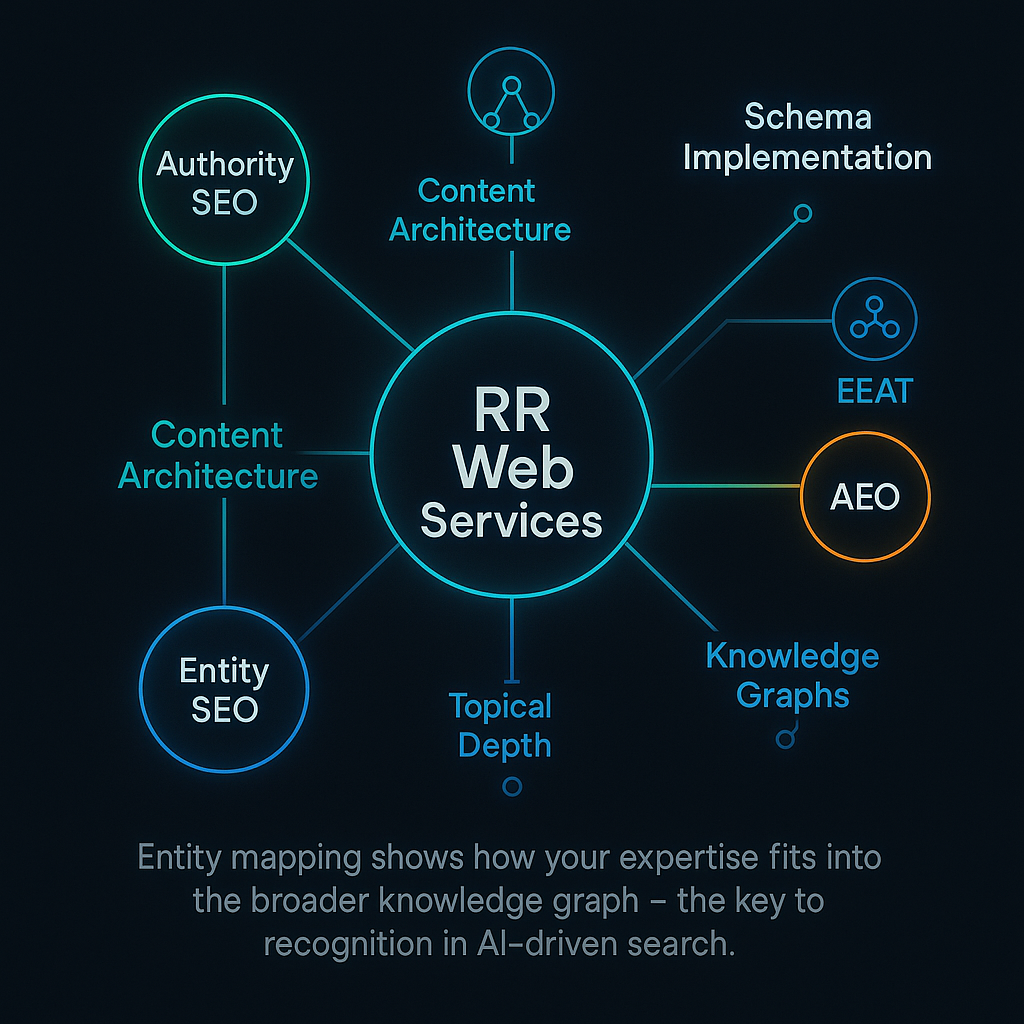
Search engines understand the world through entities: identifiable people, brands, places and concepts.
If your content doesn’t define the entities you work with, you miss out on recognition and topical strength. For RR Web Services, the main entities are authority SEO, content architecture, entity SEO, AEO and schema implementation. When those are linked through structured data and contextual references, search engines build a detailed map of what the brand knows. Our guide to entity SEO and brand recognition goes deeper.
Strong entity mapping helps:
-
Establish your brand within a topic
-
Clarify how your themes connect
-
Align your content with knowledge graph structures
-
Strengthen AI citation potential
Your content then reads as part of a larger body of knowledge, where each page adds to the others.
7. Blend EEAT and UX into your structure
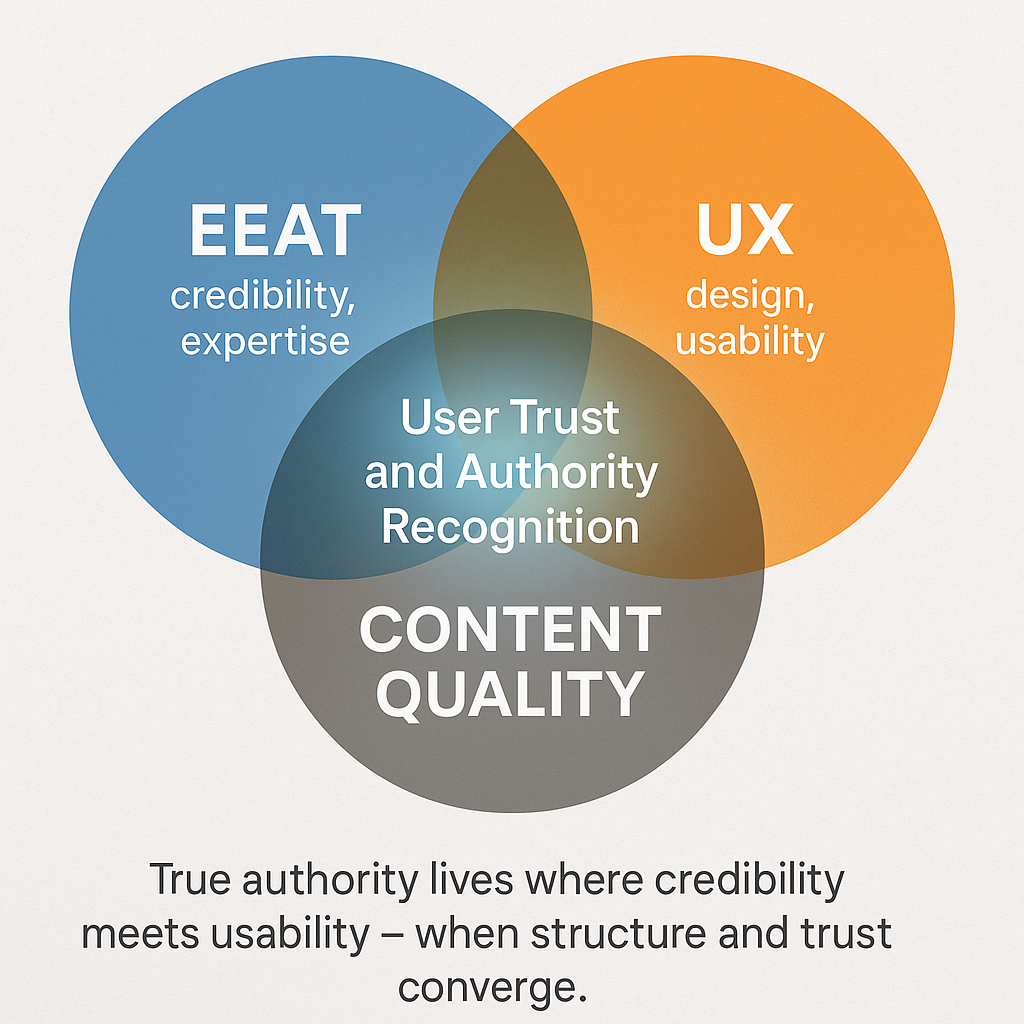
Authority also depends on how confident a user feels on your site. When visitors find what they need easily and stay engaged, algorithms read that as trust.
Each part of EEAT shows up in the content itself. Experience comes through real examples and case studies, expertise through detailed, accurate writing by qualified people, authoritativeness through consistency, and trustworthiness through clear design, transparency and accurate updates. We cover this link in more depth in how EEAT and UX build trust.
Good structure and good UX go hand in hand:
-
Clear authorship builds trust
-
Predictable navigation helps users stay oriented
-
Strong headings guide attention
-
Clean design improves focus
-
Accessible layouts make content usable for everyone
-
Visuals, examples, and case notes help readers “feel” your expertise
When content is structured for clarity and designed for comfort, your credibility becomes easier to trust.
8. Strengthen semantic bridges across topics
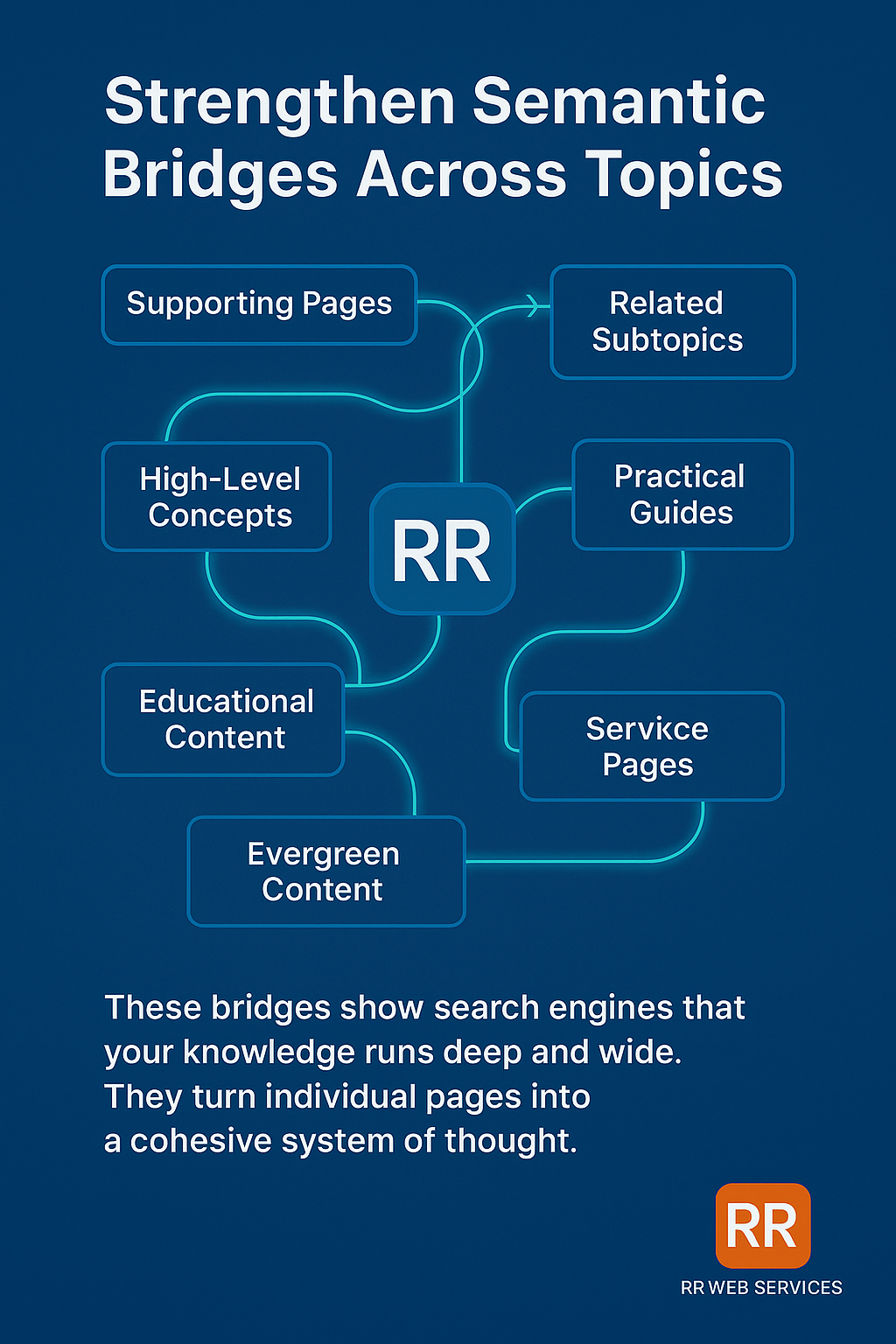
Most sites publish strong pages that never connect to anything else. As a result, the expertise feels fragmented.
Semantic bridges fix that by linking:
-
Supporting pages across clusters
-
Related subtopics that share user intent
-
High-level concepts to practical guides
-
Educational content to service pages
-
Older content with newer context
These bridges show search engines that your knowledge runs deep and wide. They turn individual pages into a cohesive system of thought.
9. Optimize for mobile, speed, and accessibility
Performance is part of architecture too. A slow or clunky site breaks the entire experience, no matter how well it is organized.
What you need to ensure:
-
Fast load times across devices
-
Clean mobile navigation
-
Accessible structures with proper markup
-
Proper alt text, contrast, and spacing
-
Lightweight scripts and compressed assets
A site that performs well signals reliability. It reduces friction, increases engagement, and reinforces authority.
10. Track, measure, and evolve your architecture
Architecture is not static. As new content appears, services change, or algorithms shift, your structure must adapt.
Measure continuously:
-
Are your pillars still the right ones?
-
Do any clusters need deeper supporting pages?
-
Have new opportunities emerged?
-
Are your most important pages still easy to reach?
-
Does schema reflect your current expertise?
-
Are internal links still logical?
-
Are key pages gaining visibility in AI summaries?
A strong structure evolves over time. That’s how you protect visibility and compound authority.
From organized content to recognized authority
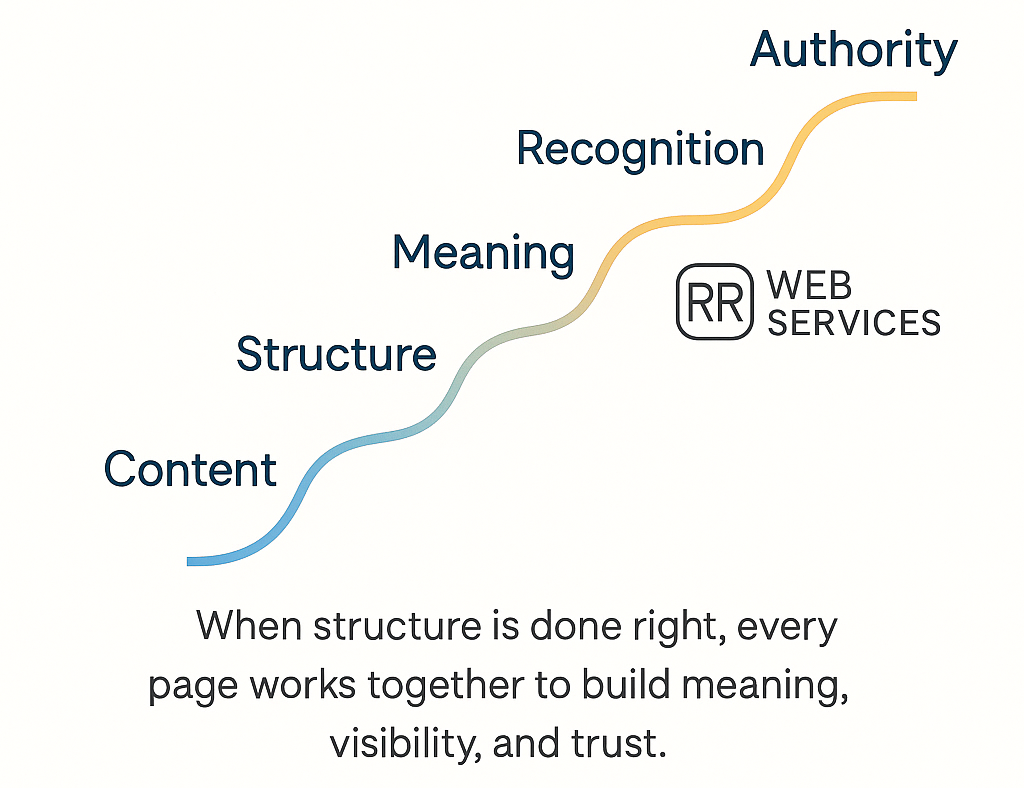
Here’s what these steps look like in practice. A B2B SaaS client came to us with over a hundred disconnected blog posts. The content was valuable but scattered, so neither users nor search engines could see its full depth. We created four pillar pages mapped to the client’s service areas, grouped related posts under each pillar as clusters, implemented schema for all major content types, and built an internal linking map that mirrored the buyer journey.
Within four months:
-
Organic visibility rose by 22 percent.
-
Average time on site increased by 31 percent.
-
Multiple FAQ and HowTo snippets appeared in Google results.
-
The brand earned its first citation in AI Overviews.
When structure, meaning, and UX move in the same direction, every page becomes part of a much bigger whole. Search engines begin to trust your expertise because it’s consistent, connected, and easy to interpret. Users feel guided instead of lost. And your brand takes on a shape that algorithms can map and recognize.
This is how structure creates visibility.
And how visibility matures into authority.
FAQs
What is content architecture in SEO?
Content architecture is the way your website’s pages, topics, and links are organized so both users and search engines can understand what you’re an expert in. It’s the structural logic that sits underneath the layout.
Why does content architecture matter for authority and rankings?
Authority builds when your pages relate to each other in a meaningful way. A clear structure helps search engines understand the relationships between pages, spreads link equity across them, and shows your depth on a topic, which improves rankings, snippet visibility, and AI citation potential.
How does internal linking improve visibility?
Internal links connect related ideas and help search engines follow your expertise. When links are placed in context and not in isolated lists, they pass authority between pages and help algorithms discover your entire topic network.
What role does schema markup play in architecture?
Schema helps search engines interpret the purpose and meaning of your content. When layered correctly, it improves eligibility for rich snippets, strengthens entity recognition, and makes your pages easier for AI to parse.
How does EEAT influence content structure?
EEAT supports the human layer of structure. Clear authorship, expertise, and trustworthy design make your content more credible. When the structure is strong and the experience is reliable, search engines trust your site more easily.
What is entity mapping, and why does it matter?
Entity mapping defines your core topics and how they relate. It helps search engines understand exactly what your business is known for. When your entities are defined clearly, your chance of being cited in AI-generated answers increases.
How often should a site’s architecture be reviewed?
A quarterly review is ideal. Architecture should also be updated whenever you publish new clusters, add services, or expand into new topics so the structure stays coherent and current.
What tools help optimize content architecture?
Tools like Screaming Frog, Ahrefs Site Audit, Semrush, Google Search Console, Schema Markup Validator, and visual mapping tools like Miro or GlooMaps help audit, plan, and maintain your structure.
How does content architecture improve AI search visibility?
AI systems rely on structured, well-linked content to build a picture of your expertise. When your site’s architecture is clear, AI engines can interpret your topics accurately and cite your content more confidently.
Is content architecture the same as a sitemap?
No. A sitemap lists URLs. Content architecture defines how those URLs relate, how authority flows between them, and how meaning is built. The sitemap is a technical file; the architecture is the strategy behind it.
What’s the difference between content architecture and website design?
Design determines how a website looks and feels. Architecture defines how its information flows. The two should work together to guide users through a logical journey.
